
Cut. Sew. Question Everything…
This quilt started as a problem.
No really—The Problem was the actual name of the file for weeks.
I’d become fixated on the Zöllner illusion, a visual trick that’s been messing with brains for over 150 years. It’s a simple idea: parallel lines look wildly skewed when short lines intersect them at an angle. It should have been straightforward to translate into fabric. It wasn’t.
I started with blocks. I always start with blocks. But the illusion wouldn’t land. Every layout fell flat. Every tweak made it worse. Eventually, I gave up on building repeating units and broke the design down into single squares and HSTs—just tiny bits of color and background space placed precisely to bend the eye. And finally, the illusion clicked.
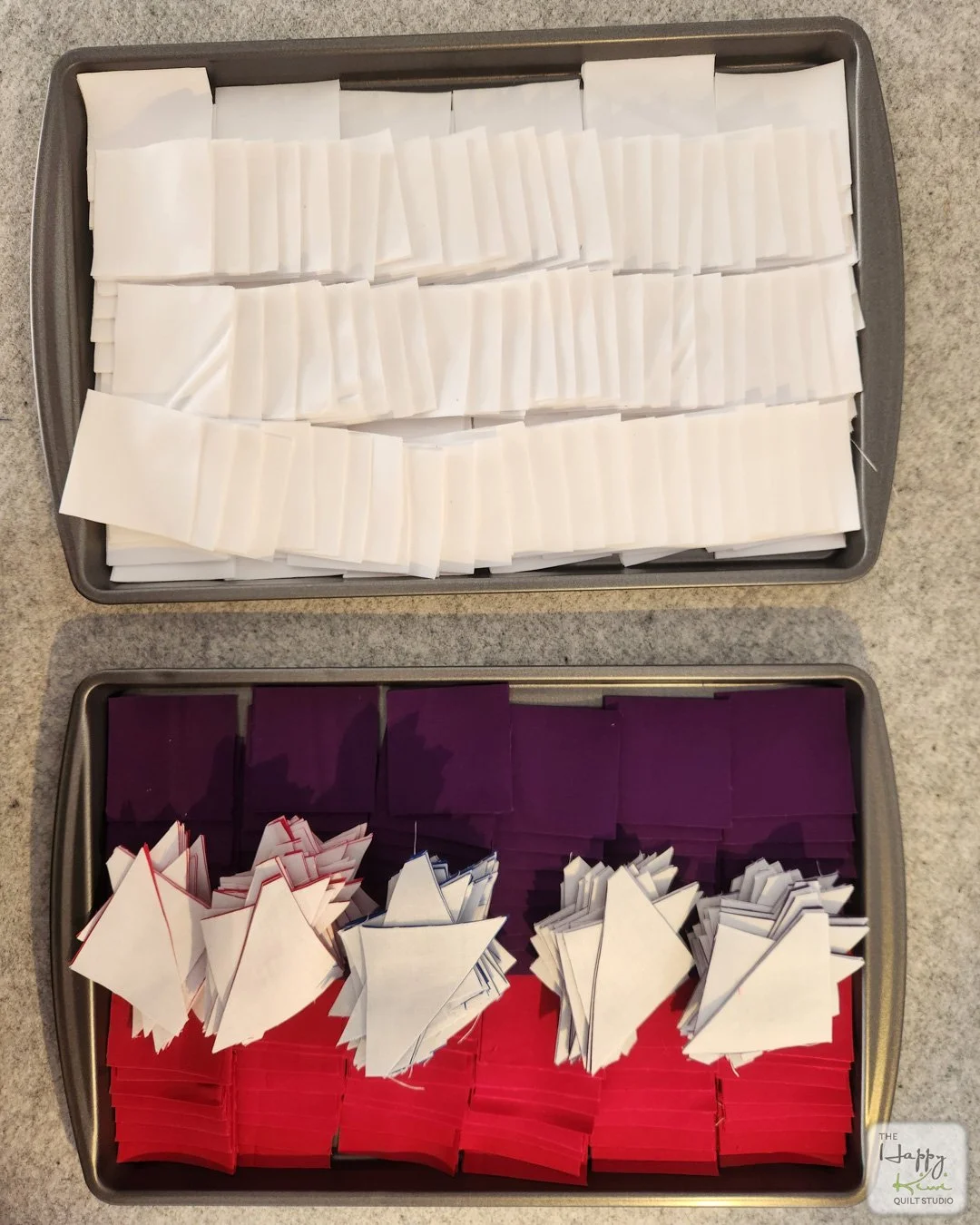
And then came the irony: To build this design, I had to cut fabric into little pieces... just to sew the same fabrics right back together again. A little for color placement, but mainly just to add seams—so they'd nest and keep the colors in the places they needed to be for the illusion to work. It’s the kind of thing that makes perfect sense to quilters and no one else.
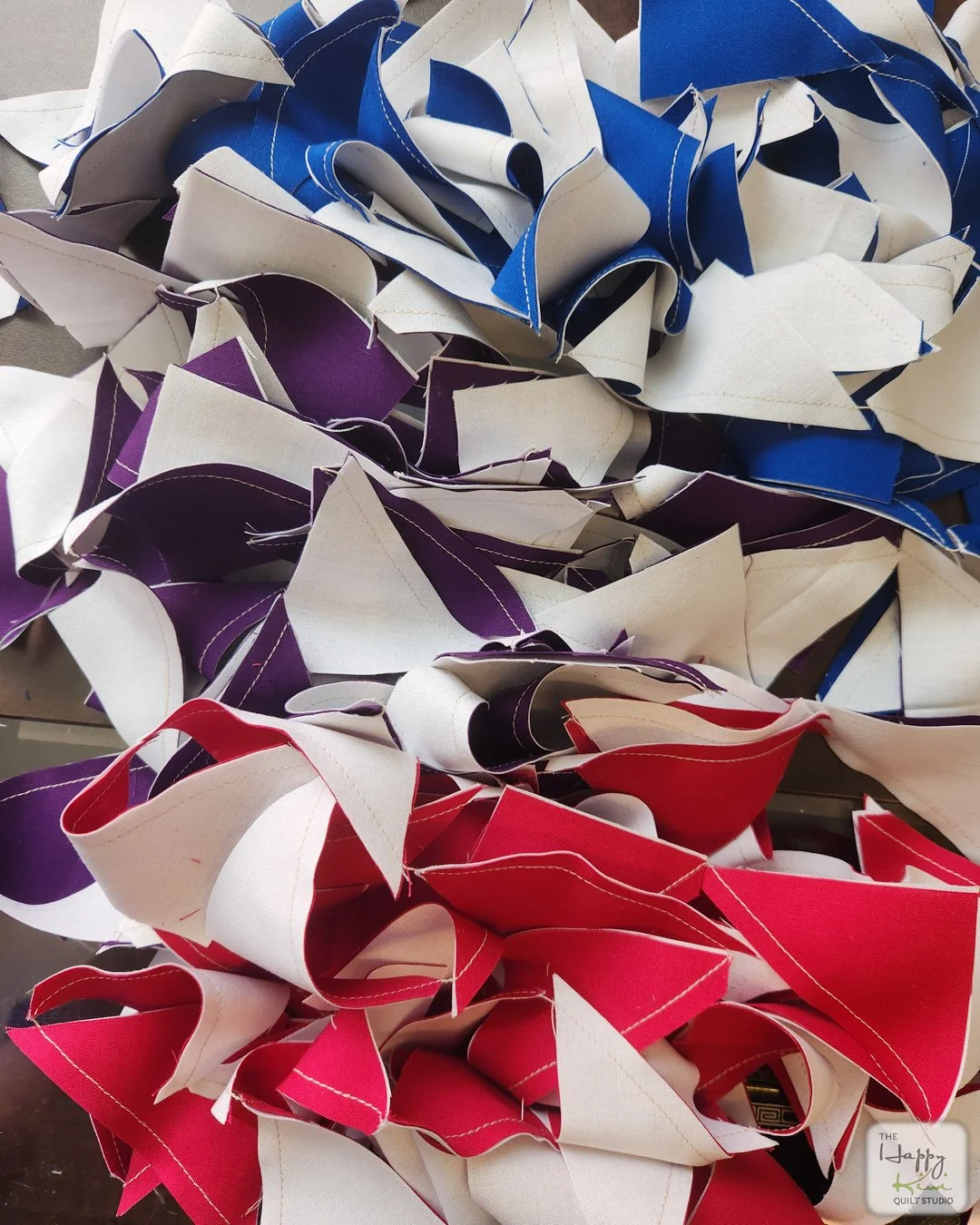
I chain pieced hundreds of HSTs in red, purple, and blue with white. My cookie sheets (yes, cookie sheets) overflowed with units. I double-checked my math. I was sure I had everything cut.
Reader, I did not.
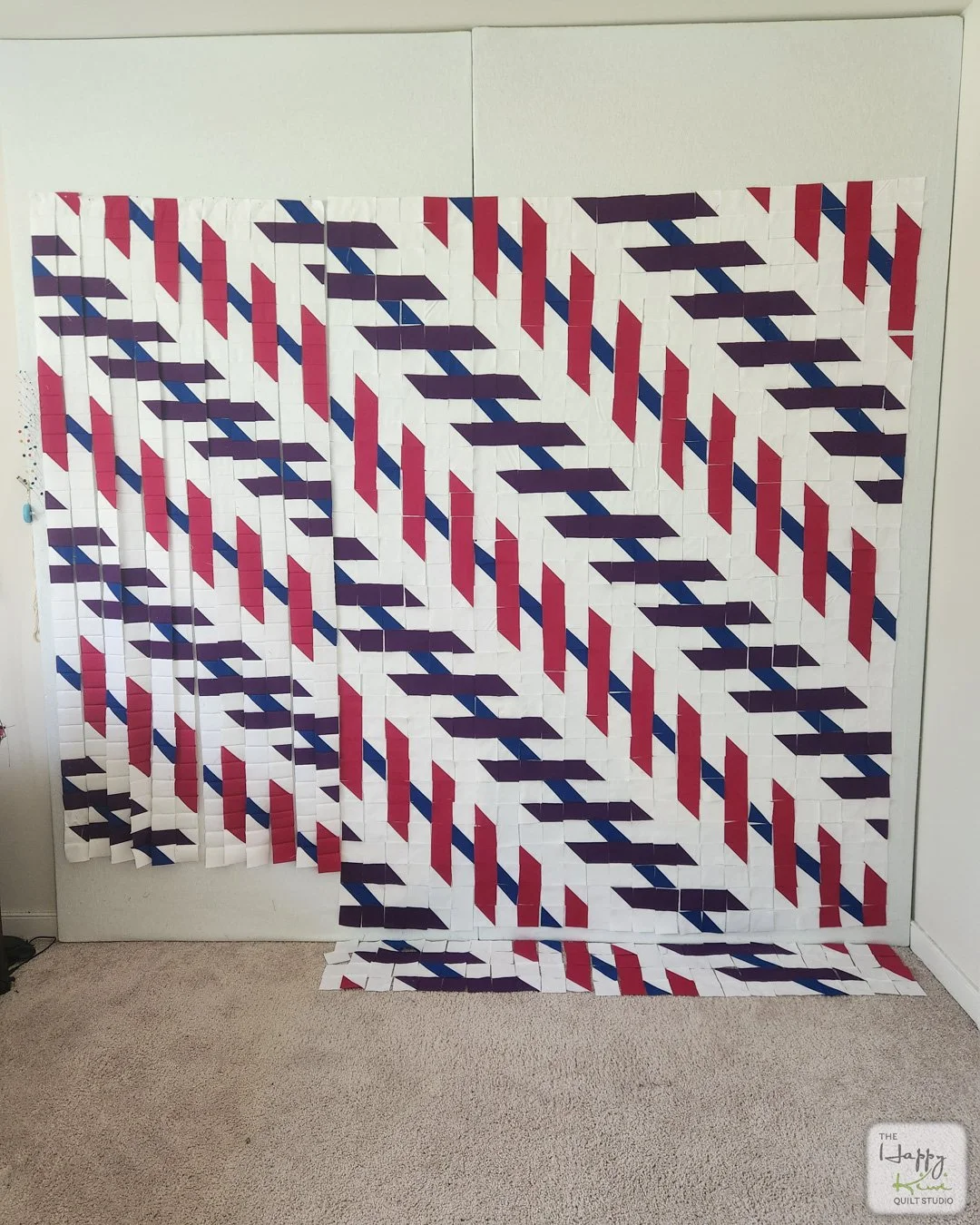
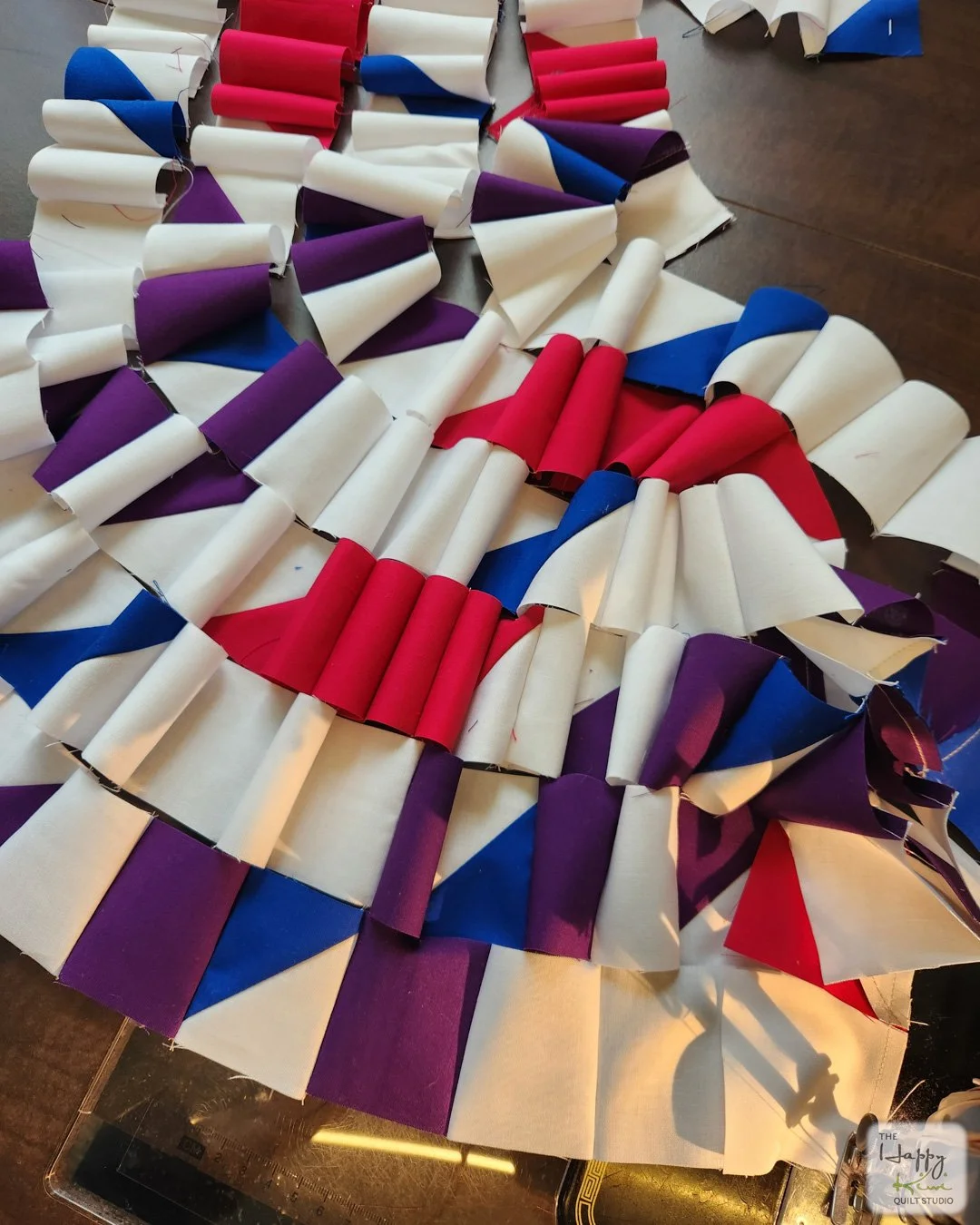
The layout took over my entire design wall (and a bit of the floor!). The quilt top is a single, massive grid—36 x 36, no repeating blocks. I tried sewing 12 columns at once and immediately got lost. Six was the magic number. Any more, and I’d forget which end was up.
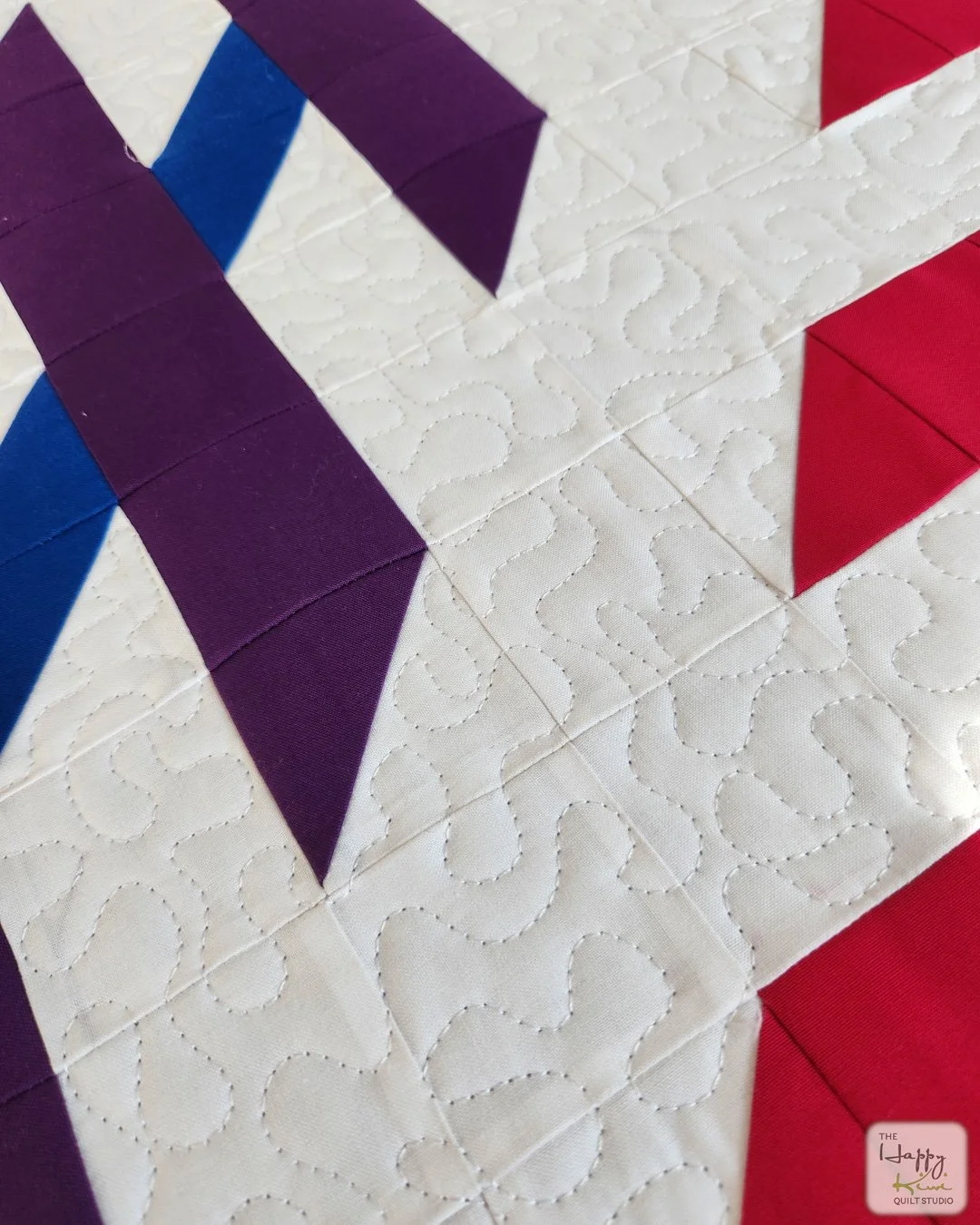
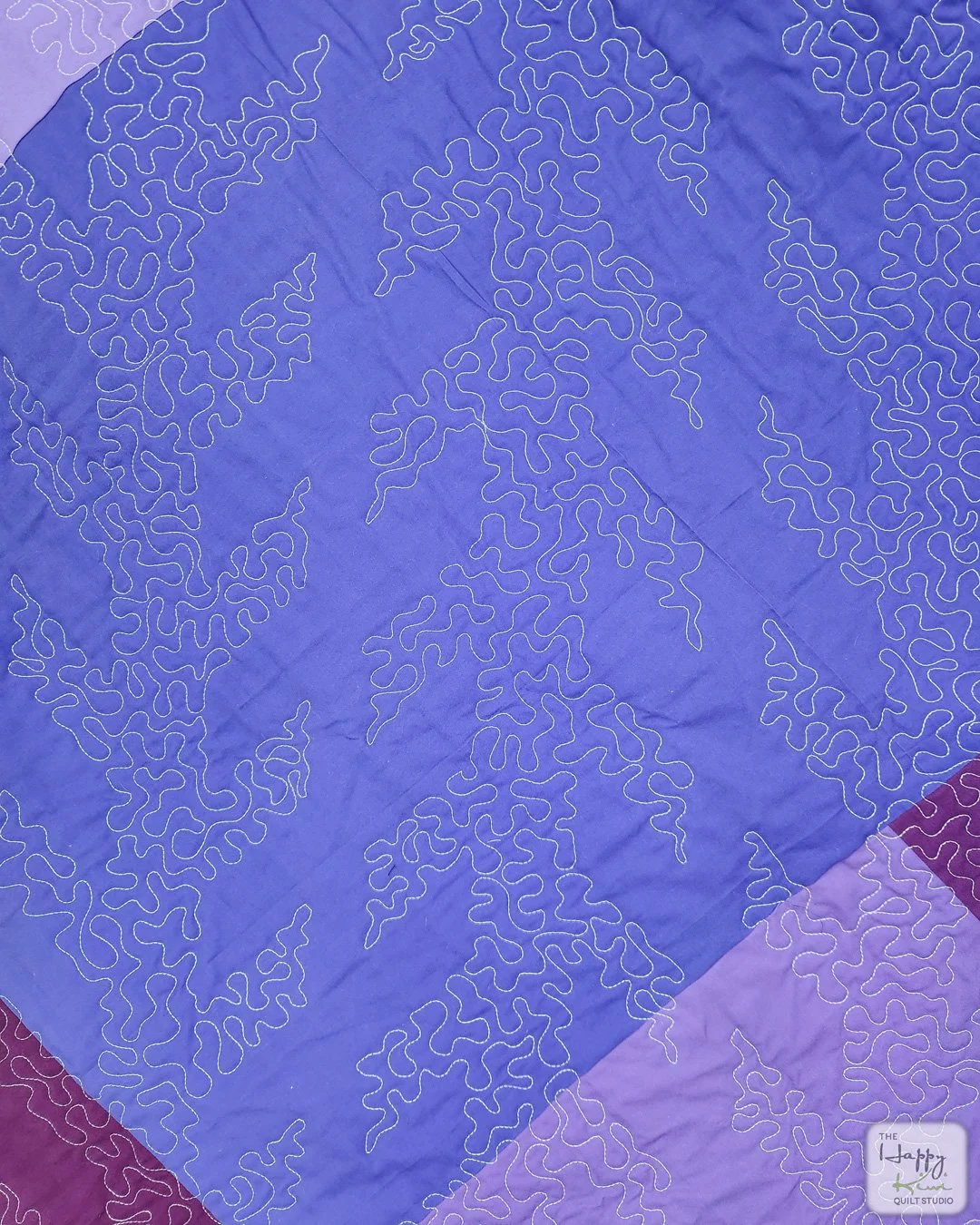
For quilting, I kept things simple: a tight meander in the white background and no quilting in the colored bars. It created a subtle trapunto effect that I loved. And on the back? The quilting lines became a kind of photographic negative of the front. Total accident and also so satisfying.
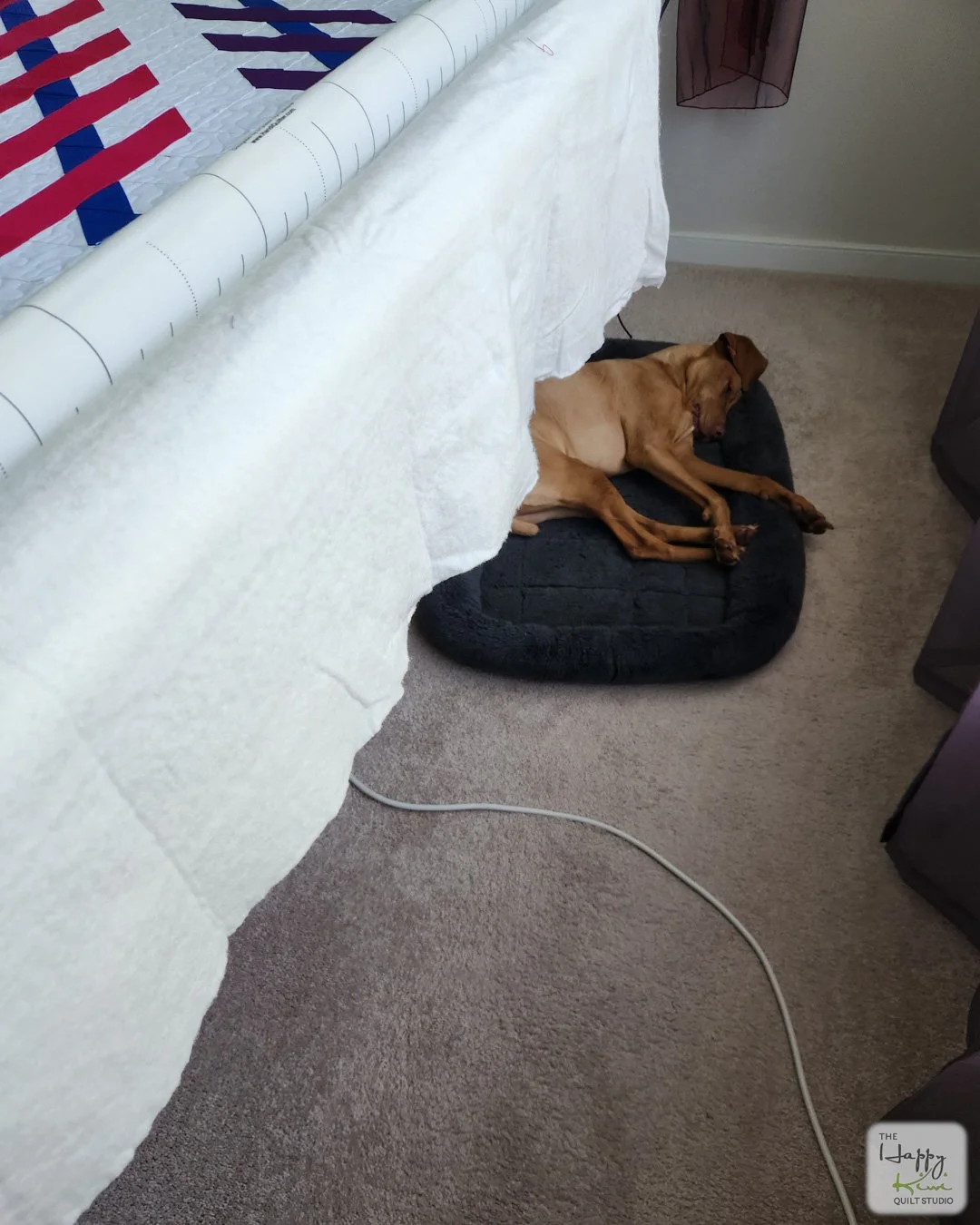
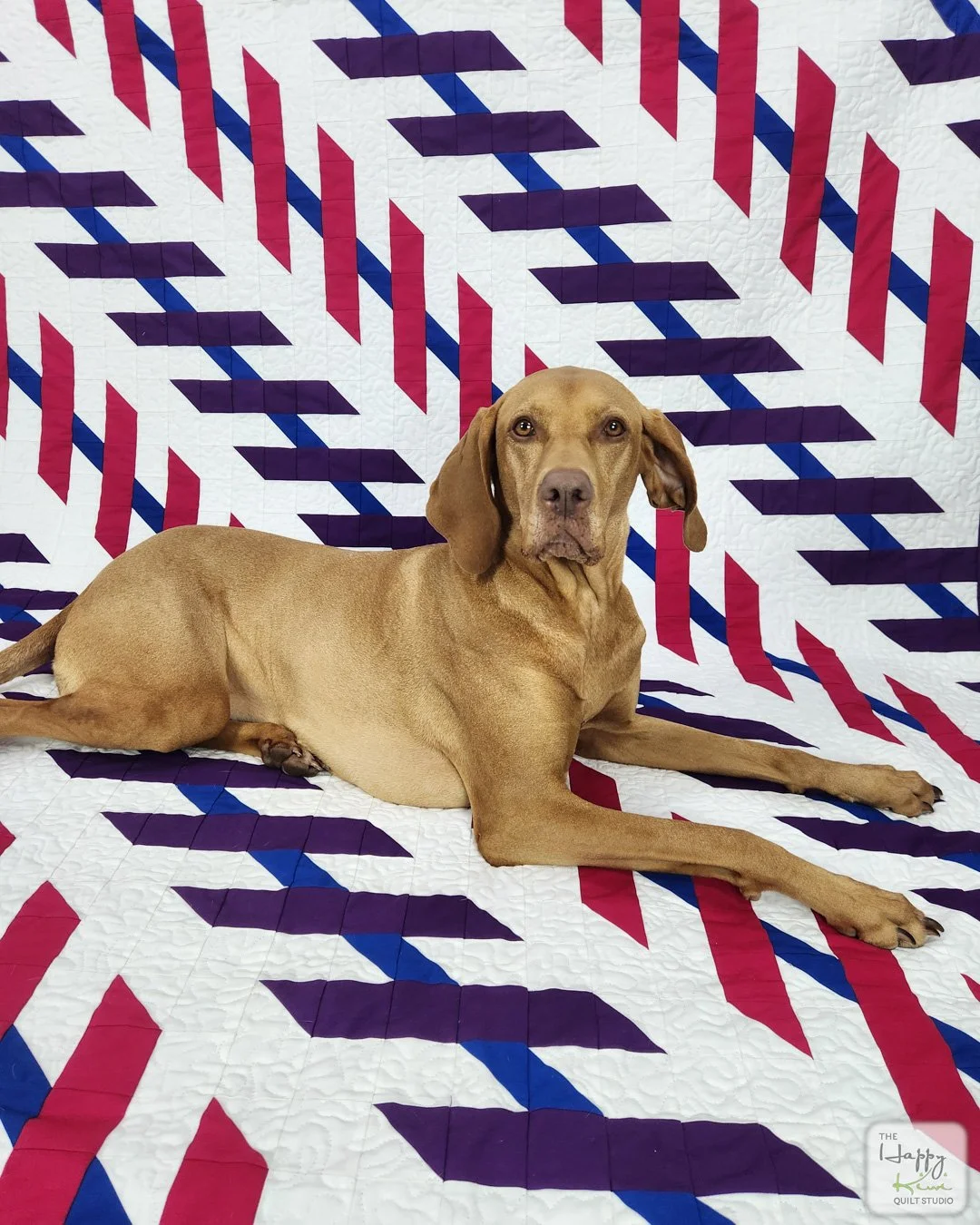
And Gracie? She’s officially a modeling pro now. She knows the moment a quilt hits the floor and positions herself accordingly—pose locked in, ready for the camera (and cookies).
This quilt was a challenge—but in the best way. It pushed me to rethink how I build patterns, how I use space, how to use structure strategically, and when to let go of structure entirely.
