It's Not a Stash, It's a Resource Center
Three years ago, before I started designing intentionally for the 100 Quilt Project, I made a king size quilt that had started with a problem.
Like many quilters, I'd spent years building a stash. Piles of fabric ready to be picked, every leftover strip, every odd-shaped offcut, every little crumb of fabric went into a tub with the promise that I'd use it one day.
Eventually that tub became... enormous.
I don't particularly enjoy clutter, and one day I realized that what I'd been calling a stash mostly felt like a storage problem. So I decided to use it.
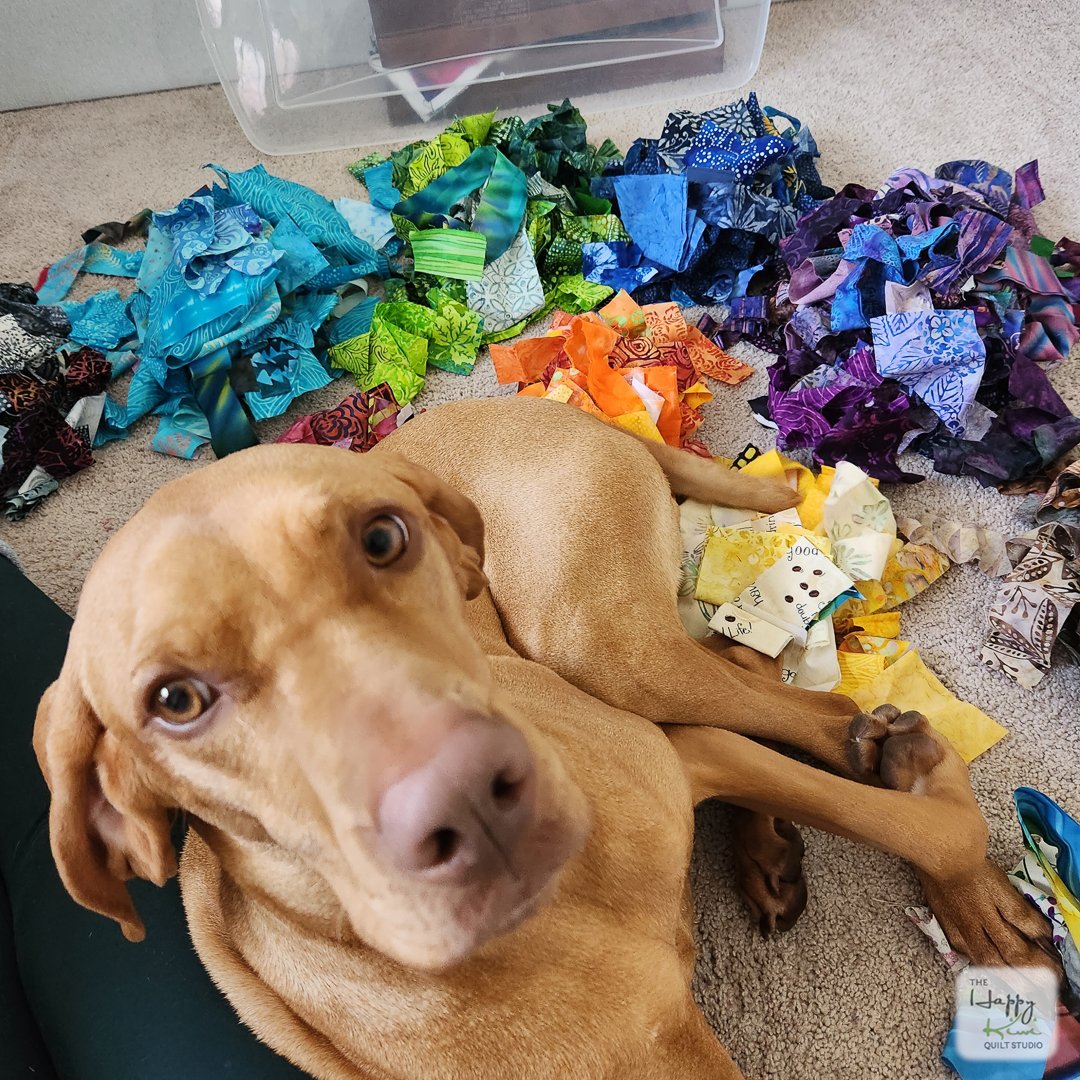
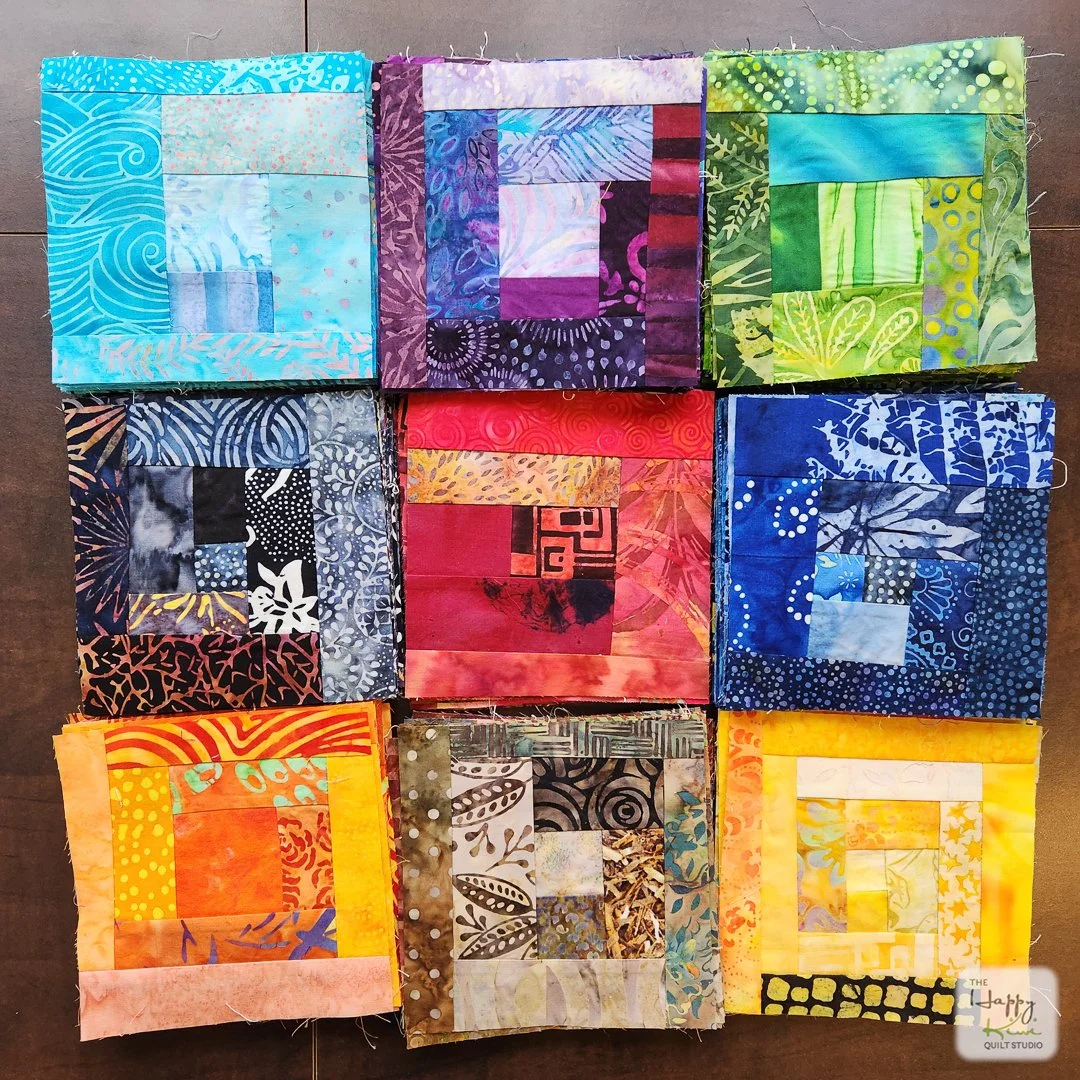
With Gracie offering her usual supervisory assistance, I sorted every string and scrap into color families spread across the floor. Some pieces were little more than crumbs, so I settled on foundation-pieced improv log cabin blocks using 5½-inch burger patty papers. They turned out to be the perfect size.
I simply kept sewing until every last string had disappeared.
Then came the fun part. Hundreds of colorful blocks covered the design wall while I shuffled them around until a layout emerged. I added narrow sashing to tame the random seams, wrestled with an on-point setting that reminded me exactly why I don't make many on-point quilts, and somehow ended up with a king-size quilt made almost entirely from scraps.
I still love that quilt.
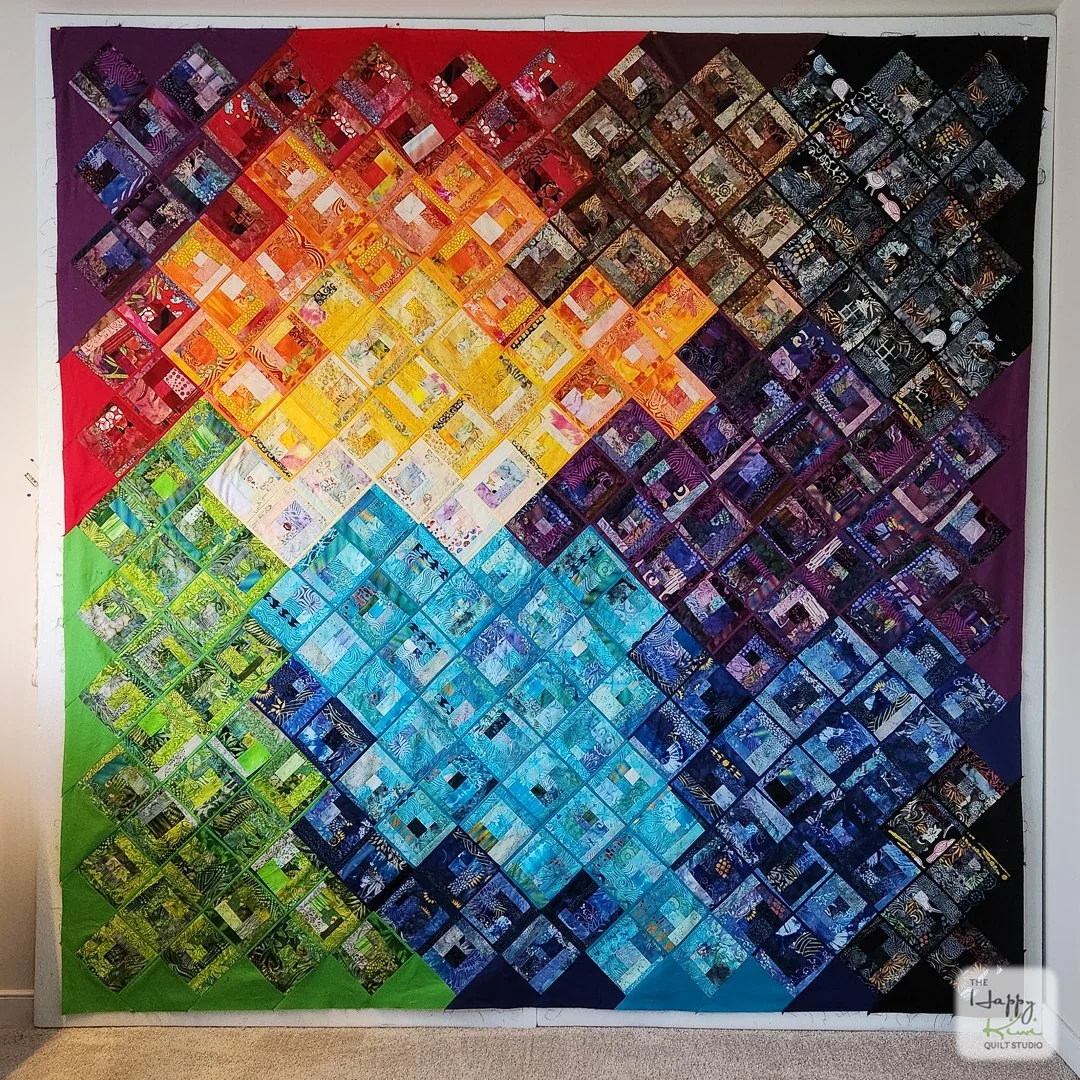
But looking back, it also marked the end of an era.
When I started the 100 Quilt Project, I was already beginning to move away from scrappy quilts toward more intentional color palettes. Some of the early designs still include scrappy elements, but over time I found myself reaching more and more for solids and carefully chosen color combinations.
Part of that shift came from designing patterns. A quilt pattern has to communicate the design clearly. Solids remove a layer of visual noise and make it much easier to see the structure of the quilt. They also make it easier for someone else to imagine the design in their own favorite colors rather than trying to recreate exactly what I've used.
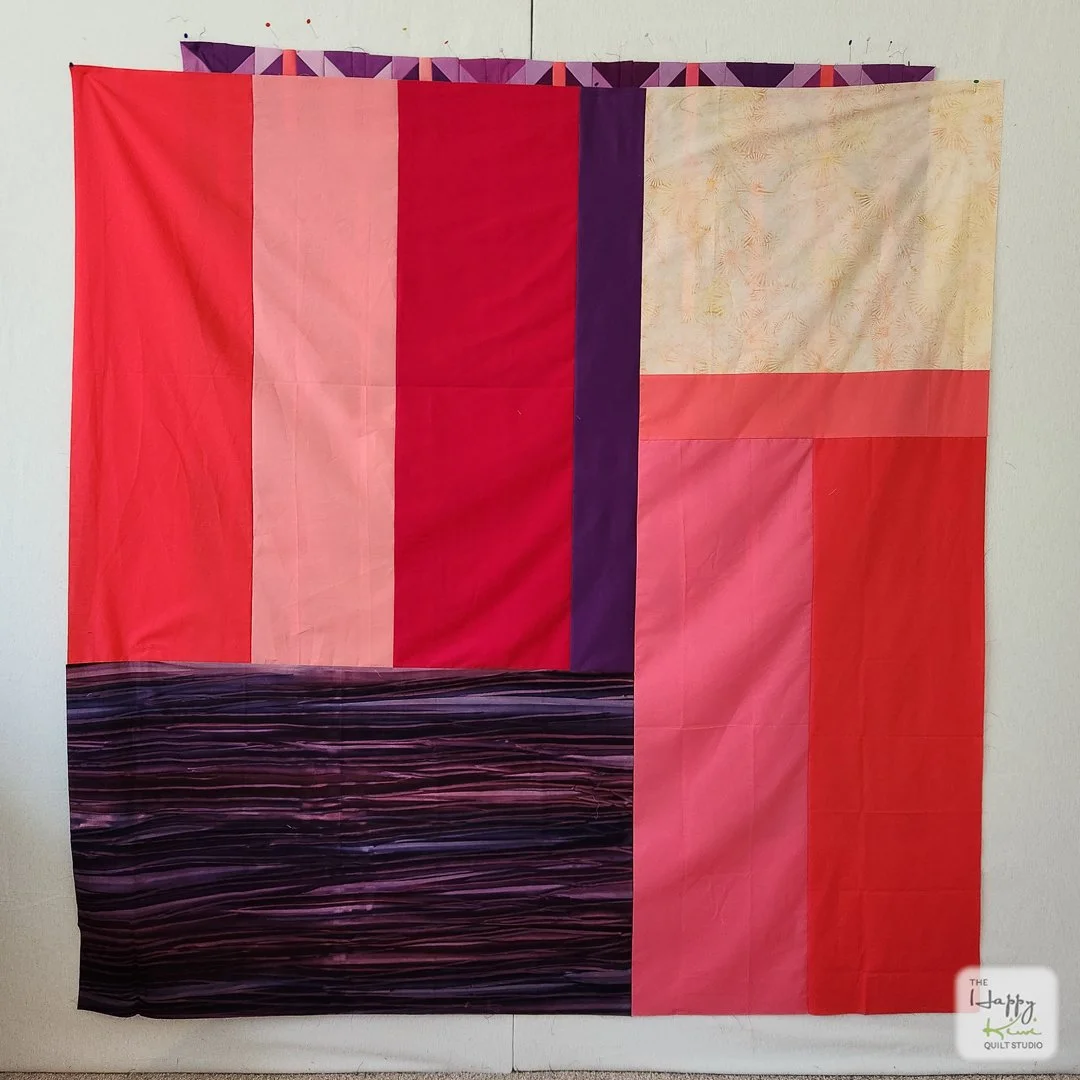
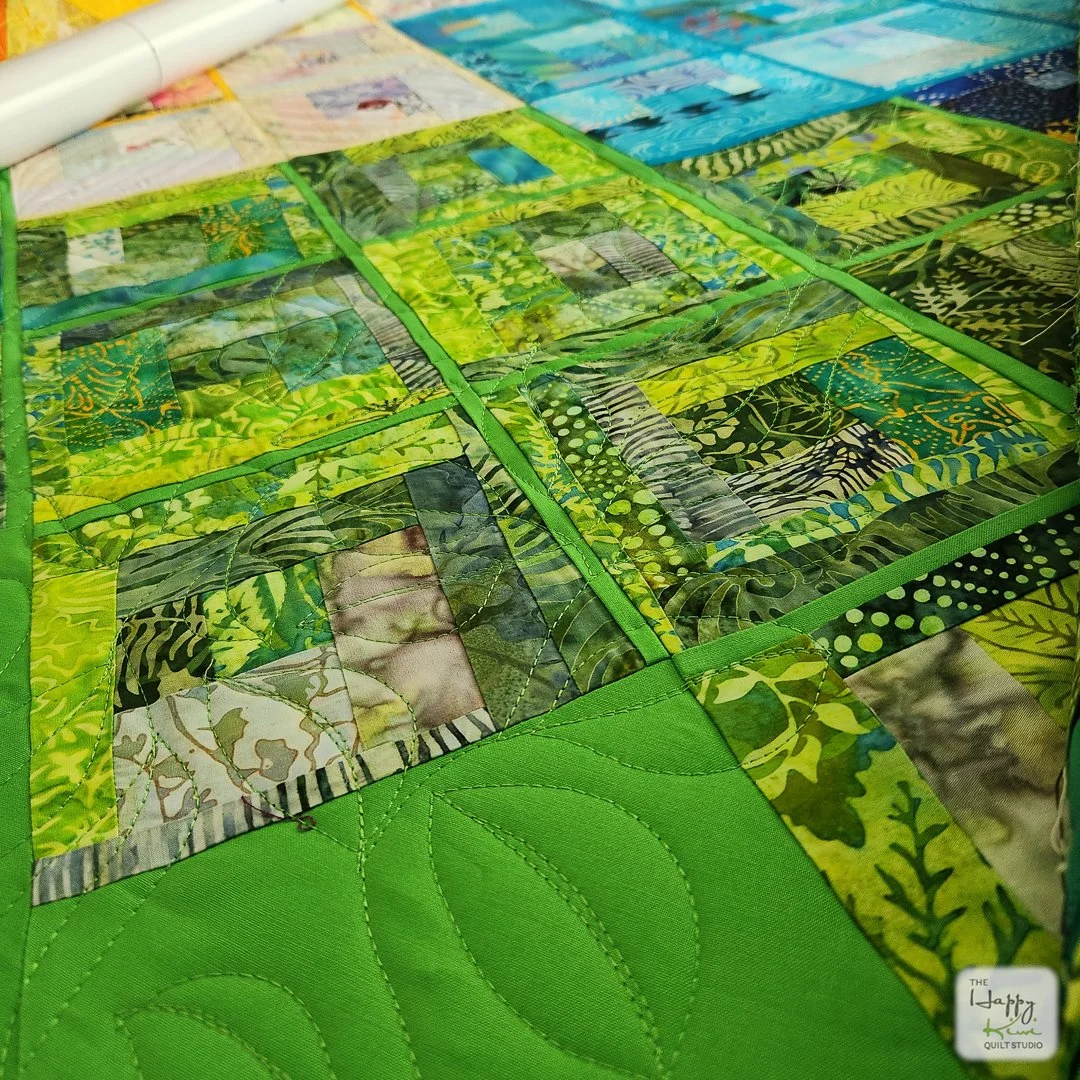
A backing with leftover fabric from the quilt top, with a couple of pieces from the stash to make it big enough.
As my quilt tops changed, so did the way I thought about fabric. I stopped thinking about a stash and started thinking about a resource center. It's a subtle difference, but an important one. A stash feels like something to accumulate. A resource center is something you use.
Over the last couple of years, I've been making a conscious effort to draw from it whenever I can. After cutting binding, the remaining fabric often ends up in the quilt backing, supplemented with other fabrics from the shelves. Piece by piece, the resource center has been shrinking.
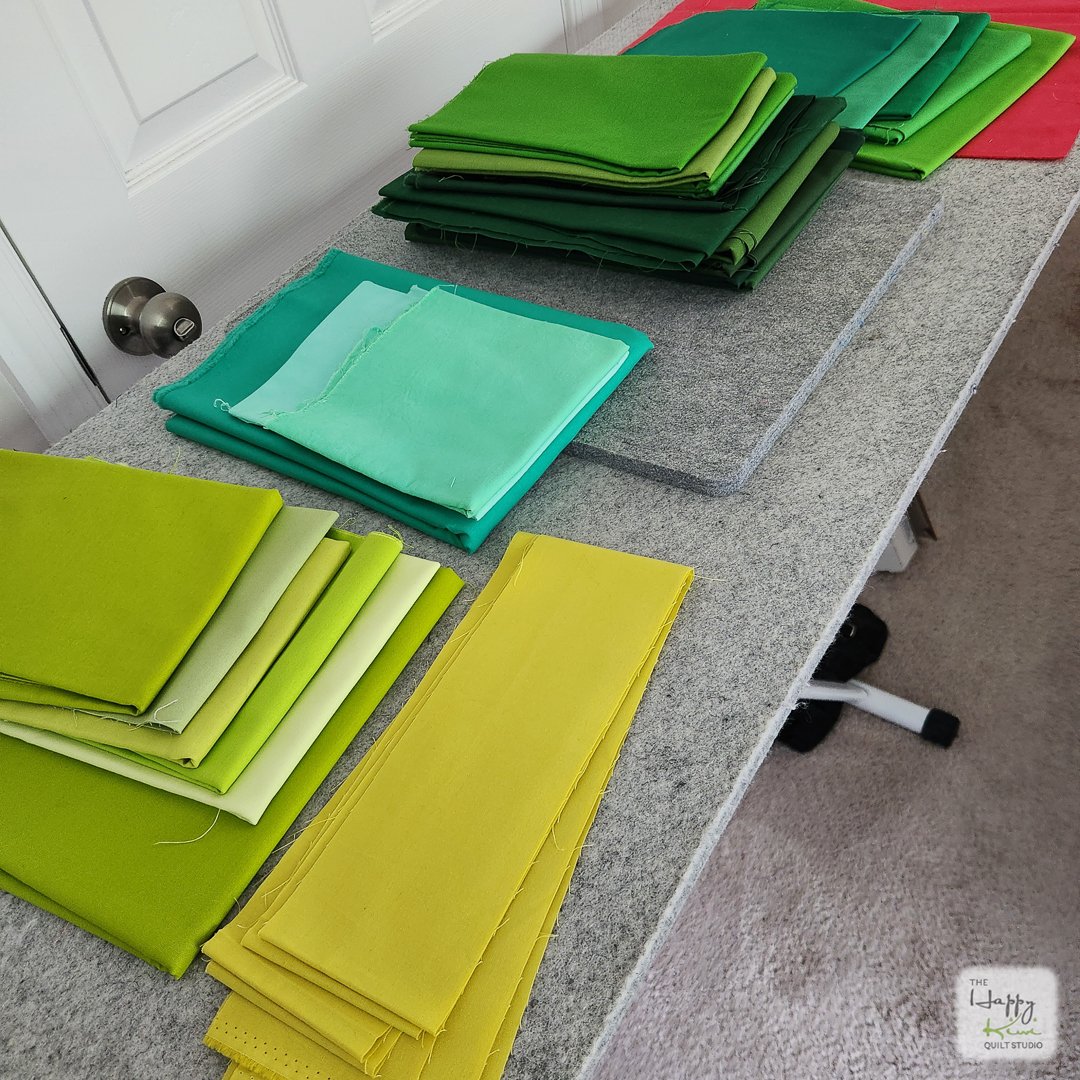
These are all the greens I have that I’m not using!
What surprised me wasn't how much fabric I used.
It was discovering which fabrics I wasn't using.
I always thought I liked green.
It turns out that's only partly true.
I love bright spring greens, fresh foliage, clear emeralds, and those vibrant yellow-greens that almost glow. Those fabrics disappear quickly.
The muddier olives and brown-greys? Apparently not.
They're still sitting patiently on the shelf, waiting for a quilt that never seems to need them.
The same goes for brown.
Every time I make a backing, I seem to reach around the browns for something else.
I hadn't really noticed that until the shelves started to empty.
The resource center has quietly become a record of my own decisions. It isn't showing me the colors I admire or the fabrics I thought I should buy. It's showing me the fabrics I consistently choose to use.
Years ago, abundance and endless choice suited the way I quilted. There was excitement in having every possibility sitting on the shelf.
Today I design differently.
Most quilts begin with an idea, followed by a deliberate color palette, and then the search for the right fabrics to bring that idea to life.
As a result, I find myself wanting something different from my resource center. I don't need it to contain every possibility anymore. I need it to support the way I work now.
Some shelves are looking noticeably emptier these days, and I wasn't expecting how much I'd enjoy that. There's more space, less visual noise, and somehow a little more room to think.
I'm sure my resource center will keep changing as my quilting does. For now, though, I'm finding that fewer fabrics don't feel limiting. It feels like room to breathe.
