Expectations, Shapes, and 5 Million HSTs
These mid-month journal posts are usually where I stop and take stock of the 100 Quilt Project. I write about my progress toward this ridiculous goal, what I'm learning along the way, and the things that are helping, hindering, or just changing as I make quilt after quilt.
This month, apparently, I've been thinking about expectations and shapes. Which is an odd combination.
But somewhere in the process of making quilt after quilt, I've noticed that the shapes I design with have remained surprisingly simple. I use squares. Rectangles. Strip-pieced units. Half-square triangles. Half-rectangle triangles. That's...pretty much it.
For someone who now routinely calls herself a quilt designer, this occasionally feels a little strange. I think there's an expectation buried somewhere in that title that a quilt designer should be doing increasingly complicated things. Surely I should be expanding into more unusual shapes and techniques. Maybe I should be designing with curves. Maybe I should own more specialty rulers. Maybe the quilts themselves should be getting technically more difficult as I make more of them.
But I don't particularly want to make technically difficult quilts. Just like a lot of quilters, I'm quite happy chain piecing five million HSTs without having to think very hard about it. I'm the person who has to make the sample, after all. I want that part to be fun. And if I don't want to spend my sewing time wrestling with unnecessarily complicated construction, why on earth would I want to put someone who has been generous enough to buy one of my patterns through it?
None of this began as a deliberate design philosophy. Some of it was laziness. When I started writing patterns, I didn't want to write complicated instructions. I didn't want to draw seventeen diagrams for one step. I wanted someone to be able to make my patterns with the basic quilting tools they already had.
Mostly, I didn't want the emails from someone understandably annoyed that they'd bought a pattern only to discover they also needed to buy a ruler. An inspiring beginning to a design philosophy, clearly.
I also remember buying a quilt pattern when I was first figuring out how patterns were written. I opened it, looked at the tiny text and sheer volume of instructions, and was immediately overwhelmed. I didn't even want to start. That stuck with me.
I don't want someone to open one of my patterns and have that reaction. I want the construction to look manageable. That doesn't mean every quilt needs to be easy or every pattern needs to be for a beginner. Some of my designs require more precision, more organization, or more experience than others. But complicated just for the sake of being complicated doesn't interest me very much.
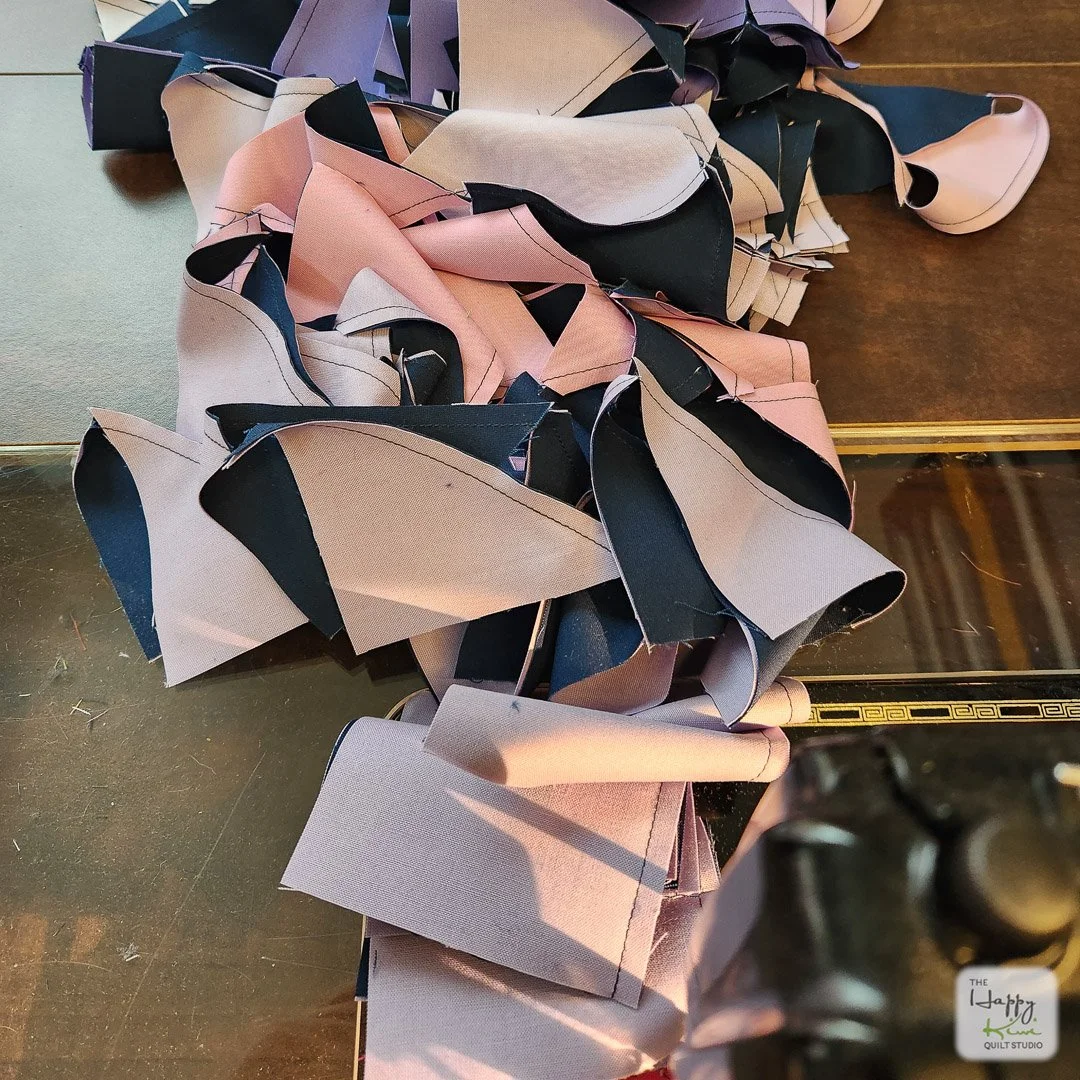
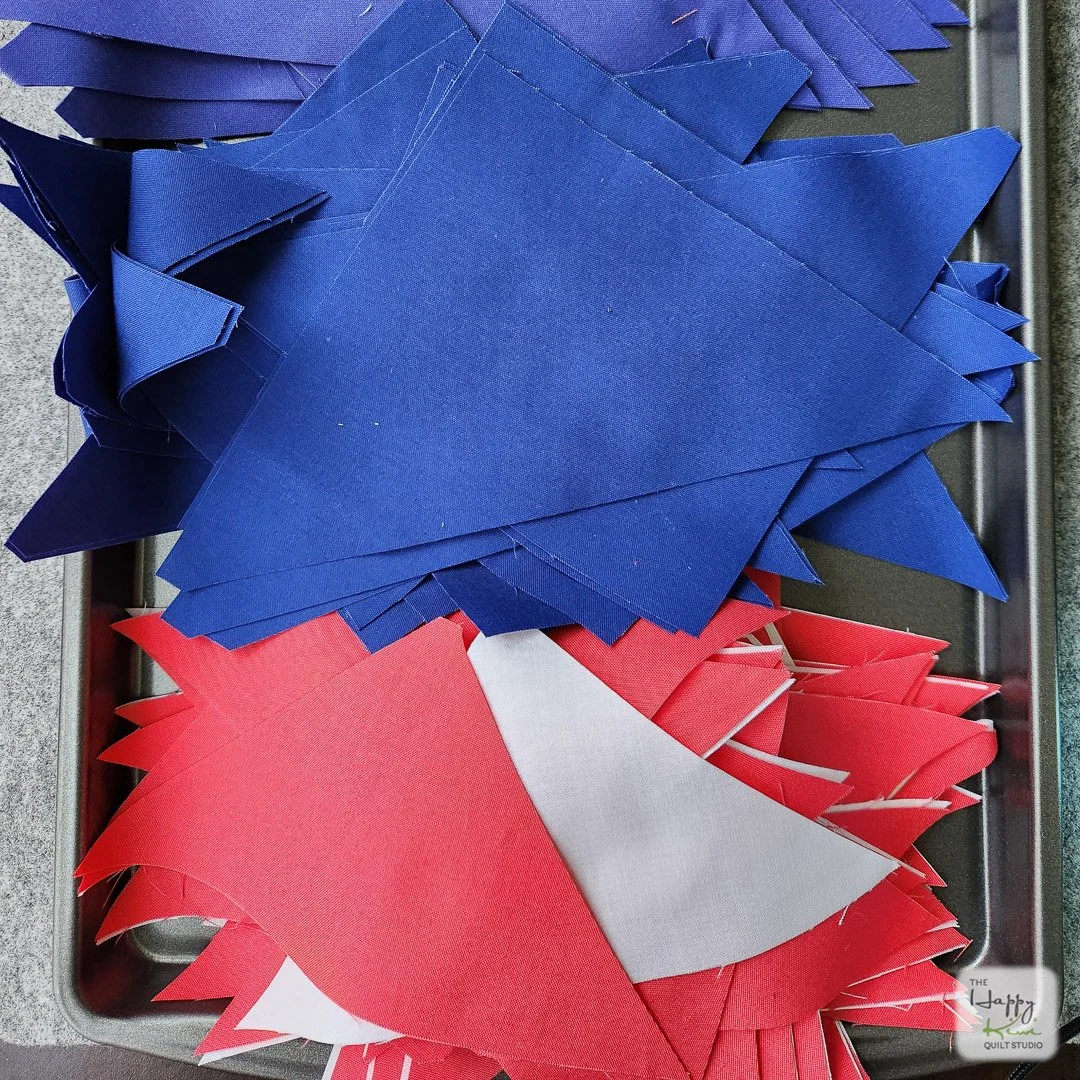
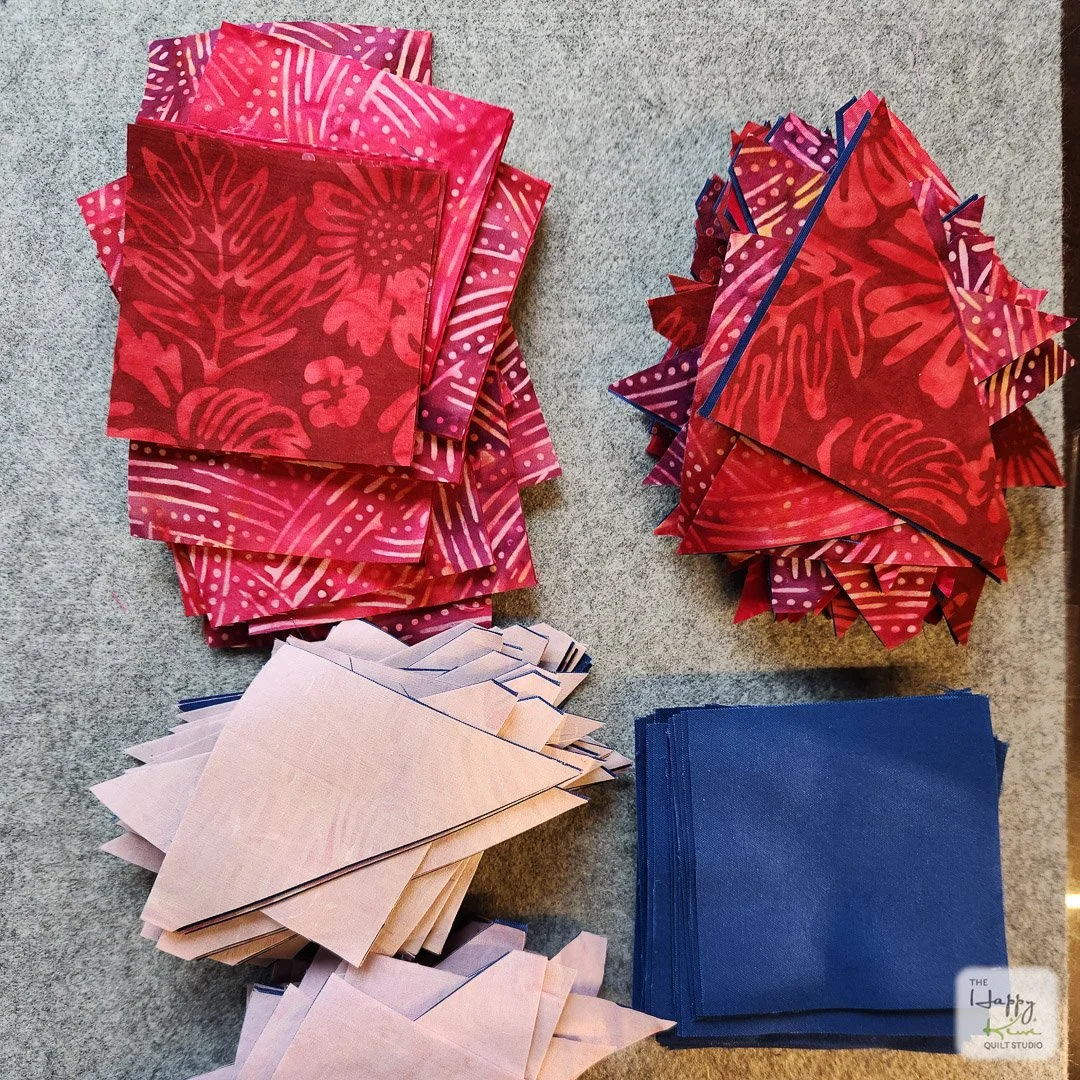
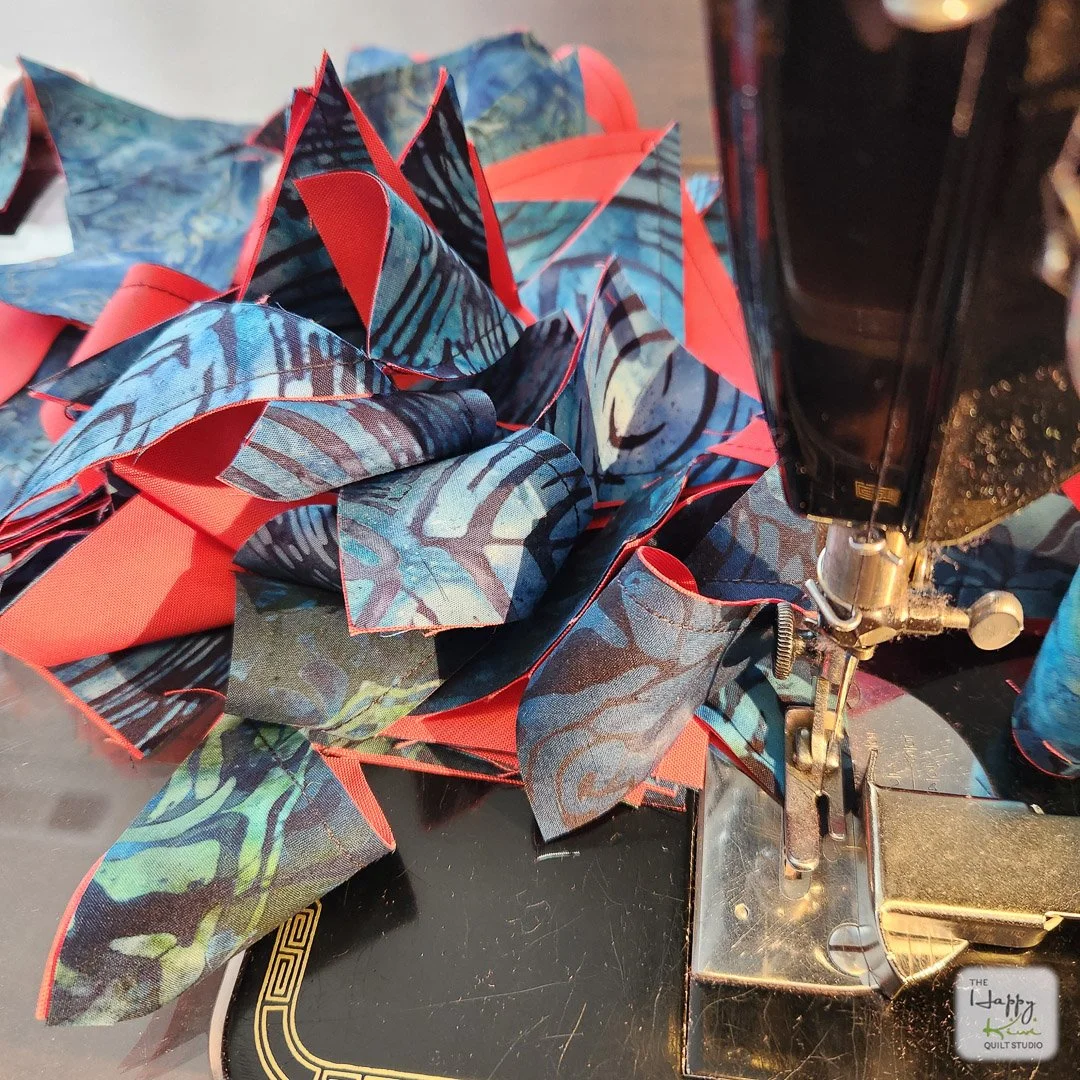
Last month, I wrote about my fabric resource center and how I've been enjoying watching it get smaller. For years, having lots of fabric felt like having lots of possibilities. Lately, I've found that I don't necessarily want every possibility sitting on the shelf. Maybe there's a little of that happening here too.
Quilting offers an almost ridiculous number of possibilities. There are curves and improv and foundation paper piecing. There are templates for every conceivable shape. There are rulers for triangles and diamonds and hexagons and probably seventeen other things I don't even know exist. There are multiple ways to construct many of the same basic units. There is a lot you can do.
Apparently I keep choosing squares.
I ran directly into this with a recent quilt. The design started with me tinkering in my design software, trying to figure out whether I could create a particular effect by cutting angled pieces from strip sets. What I really wanted was a 60-degree angle, but I thought I would start with something simple and figure out a 45-degree cut first.
It was not simple.
I could make the geometry work. What I couldn't see was a reasonable way to turn the construction into pattern instructions without producing pages of diagrams and explanations about exactly where to place a regular quilting ruler, how to measure the angle, which direction everything needed to face, and how not to cut the whole thing incorrectly. It got complicated. Fast. And I could already imagine opening the finished pattern and seeing all that text.
Nope.
So I went back to the shapes I already use. HSTs naturally gave me the 45-degree angle. HRTs gave me a gentler angle. I started playing with those instead, and they worked. The design changed along the way, but I got the visual effect I wanted without making the construction complicated simply because I could.
There is a slight confession required here. I absolutely use specialty rulers to cut my own HSTs and HRTs. I like them. They're fast. They're accurate. I own them, so I'm going to use them.
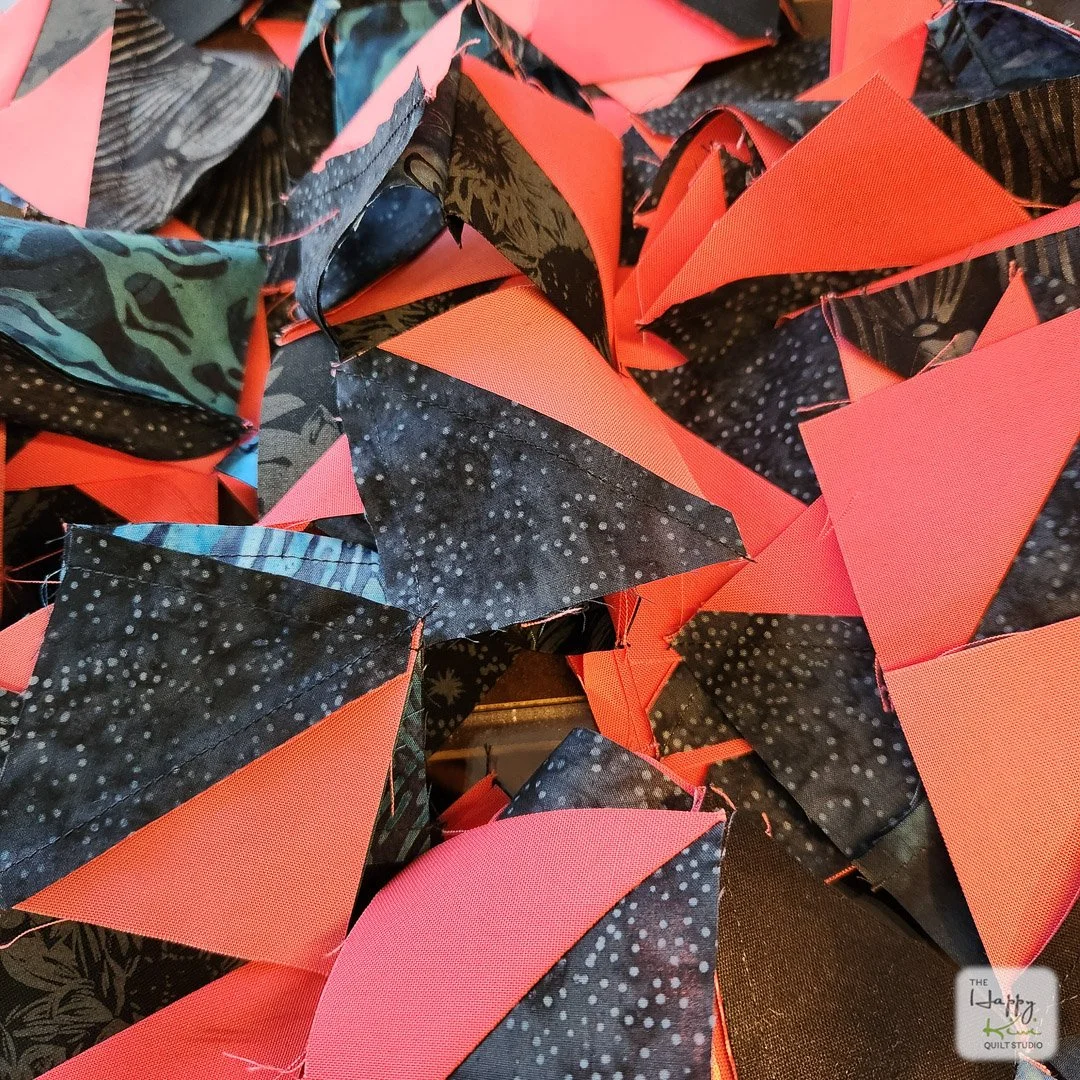
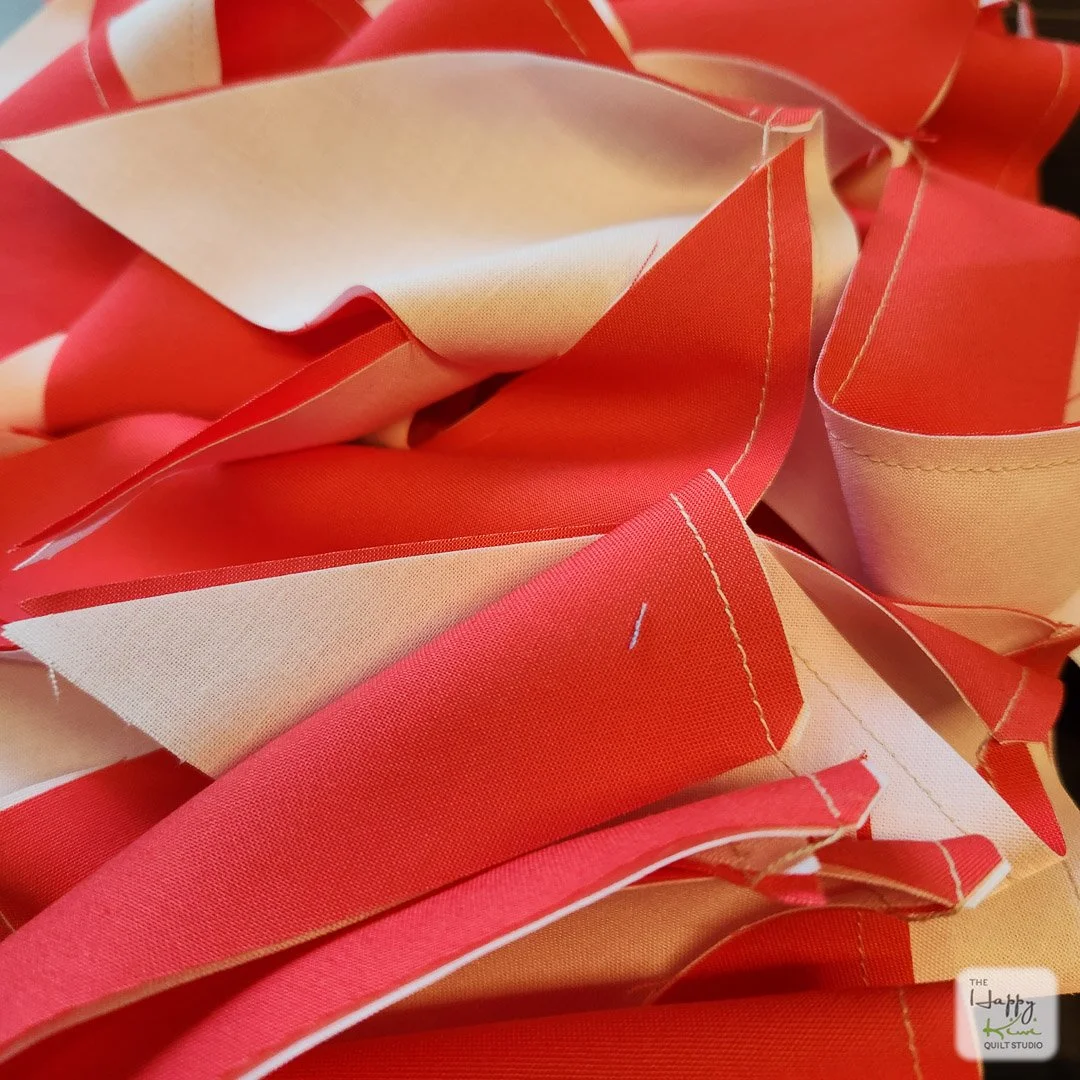
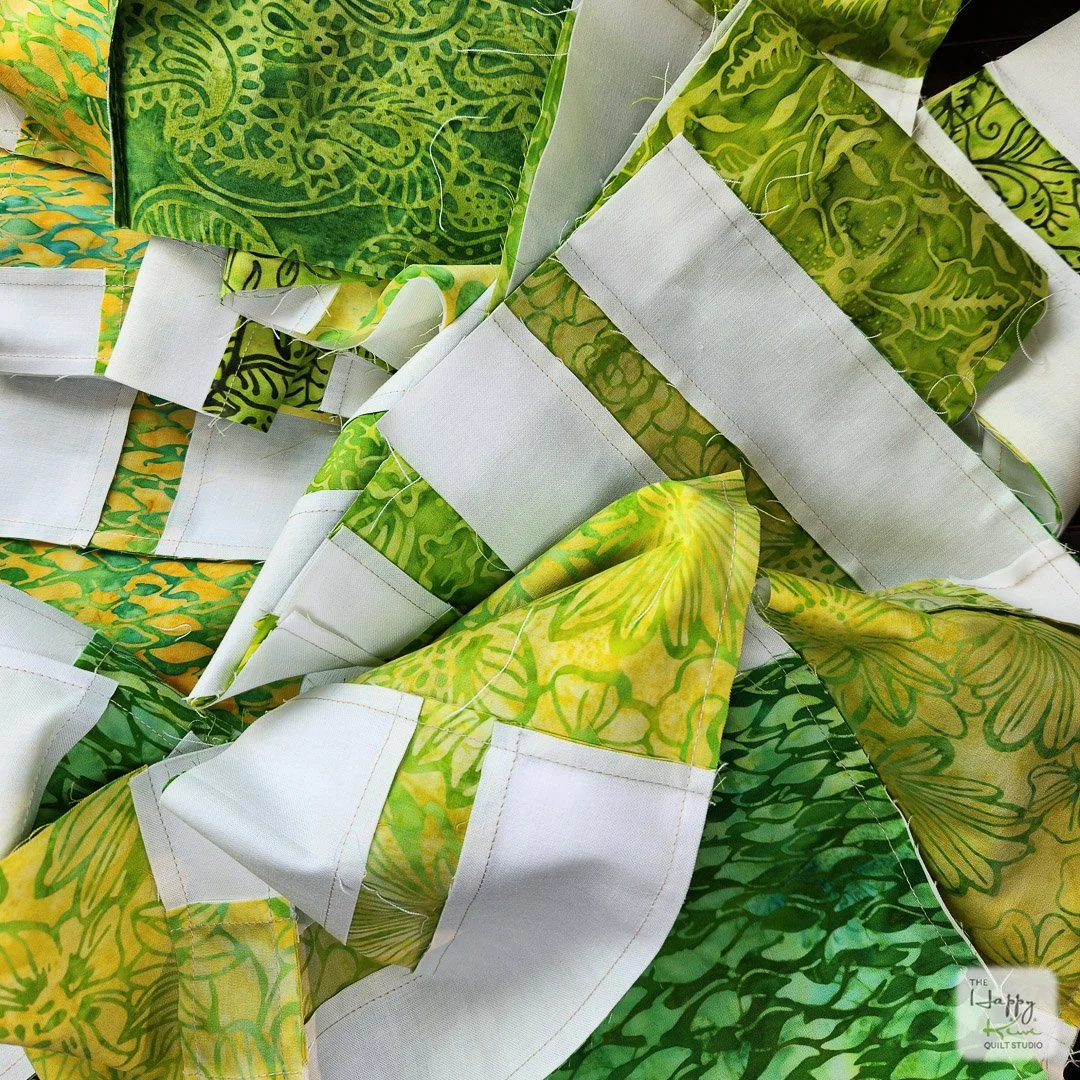
But my patterns don't depend on them. I write the instructions using the traditional mark, sew, cut and trim methods so someone with basic quilting tools can make exactly the same quilt. If you own a specialty ruler and want to use it, excellent. If you don't, you don't need to go shopping before you can start. I've realized that distinction matters to me.
What I hadn't realized until recently is how much all of these practical decisions have shaped the way I design. Every time I start a new design, I'm essentially working with the same little collection of pieces: squares, rectangles, HSTs and HRTs.
Then the challenge becomes figuring out how to jigsaw those pieces together into something new. Change the proportions. Rotate something. Shift a row. Combine units. Break a shape apart and figure out whether I can rebuild it from the pieces I already know how to make.
Sometimes I can't. I've abandoned designs because I couldn't find a sensible way to construct them. I've also abandoned construction ideas because, although they technically worked, the resulting pattern would have been far more complicated than I wanted it to be.
Oddly, I don't find that limiting. There is an enormous amount of design space inside those few basic shapes. Every time I think I must be getting close to exhausting it, I move something, rotate something, change a proportion or put the pieces together differently, and another possibility appears.
Maybe becoming a better quilt designer doesn't mean learning how to make my quilts increasingly complicated. Maybe, for me, it means getting better at making the designs I want from the simplest pieces I can.
Or maybe some future quilt will involve curves, templates, seventeen specialty rulers and a 46-page instruction booklet. I reserve the right to change my mind.
But there will not be Y-seams.
I do have standards.
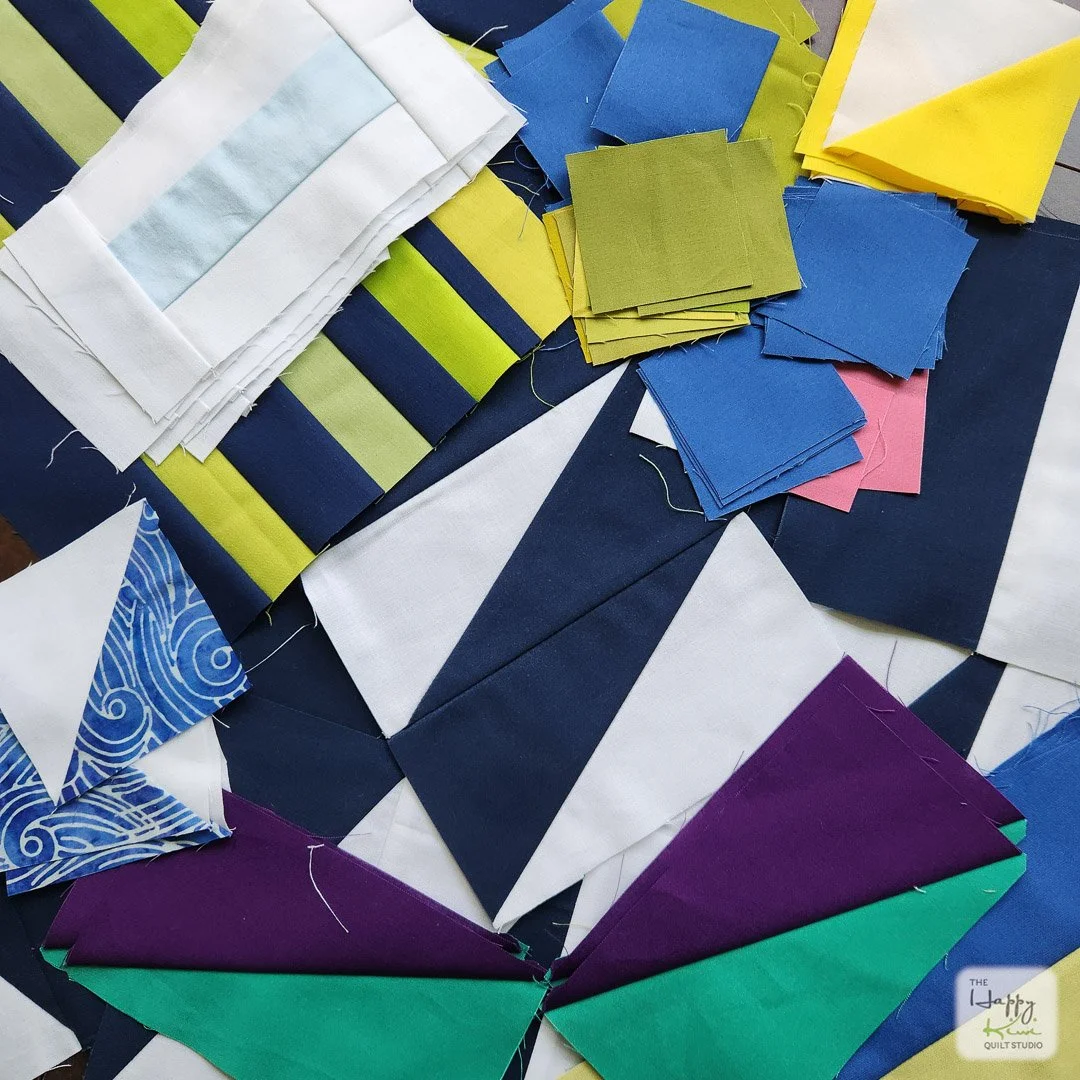
Apparently this is my design vocabulary.
