
When Your Quilt Grumbles at You (Colorfully)
This quilt began with foam. Not the poetic kind drifting over the top of rolling waves, but actual soundproofing foam I’d used to stop thread spools from rolling around in a drawer. It was oddly satisfying. Angular, rhythmic, full of triangles. And it lodged itself in my brain.
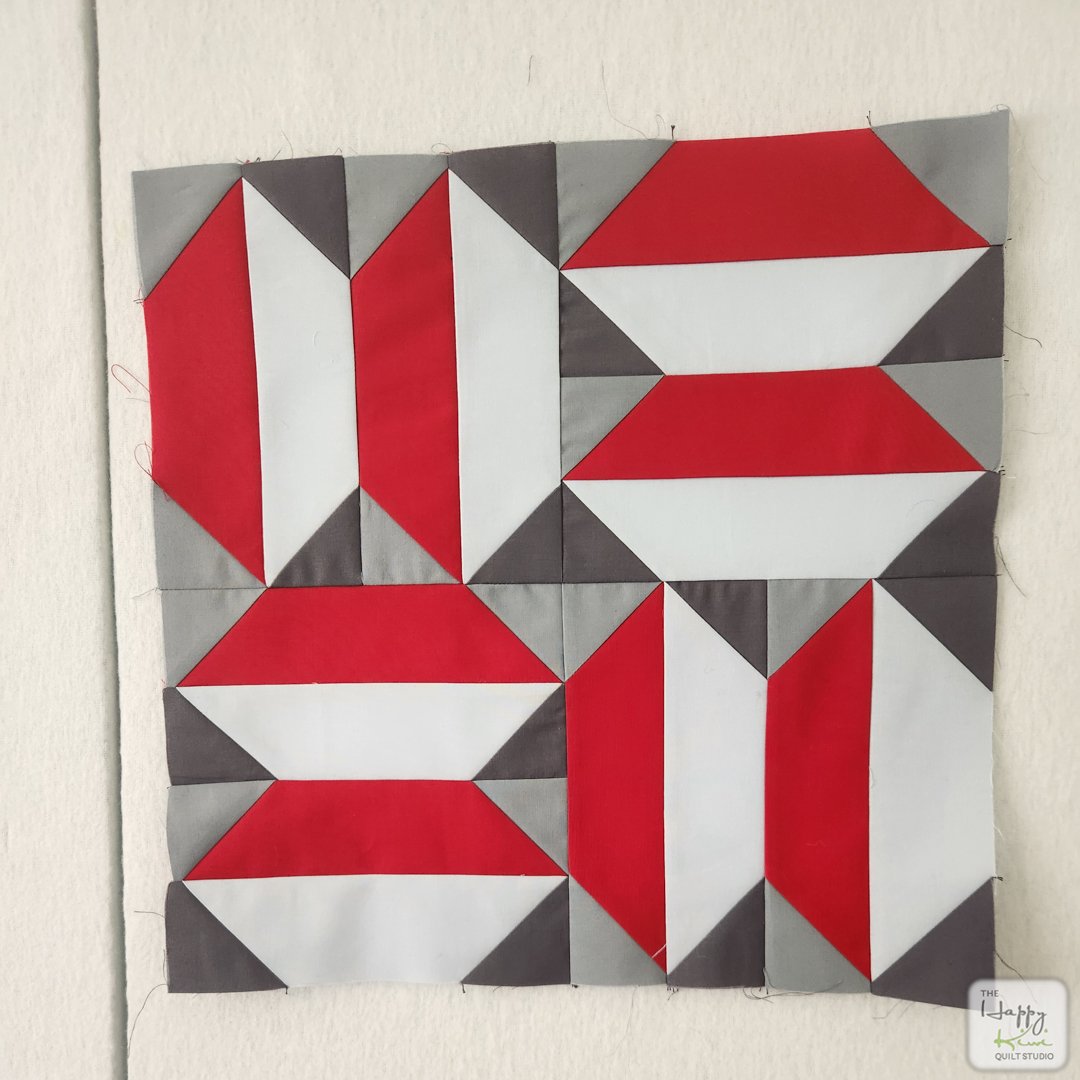
I’d made a quilt years ago with a similar shape, but when I recreated it in Illustrator, it didn’t have the energy I remembered. I added corner triangles. Better. I rotated the blocks. Much better. The texture came alive, and suddenly I could see those foam panels in fabric form. That’s when it got its name.
From there, the quilt got opinionated.
First came the seams. I always press my seams to one side. Nesting makes everything tidier, and pressing them open? No thanks. It’s fiddly and scorches my fingers every time. But when I laid out the blocks, the triangle seams that nested beautifully within each block started grumbling at me when they met each other. They refused to behave. No matter what I did, I couldn’t get the triangle seams to nest when the blocks came together. Inside the block? Perfect nesting. Between blocks? Total clash.
I grumbled back.
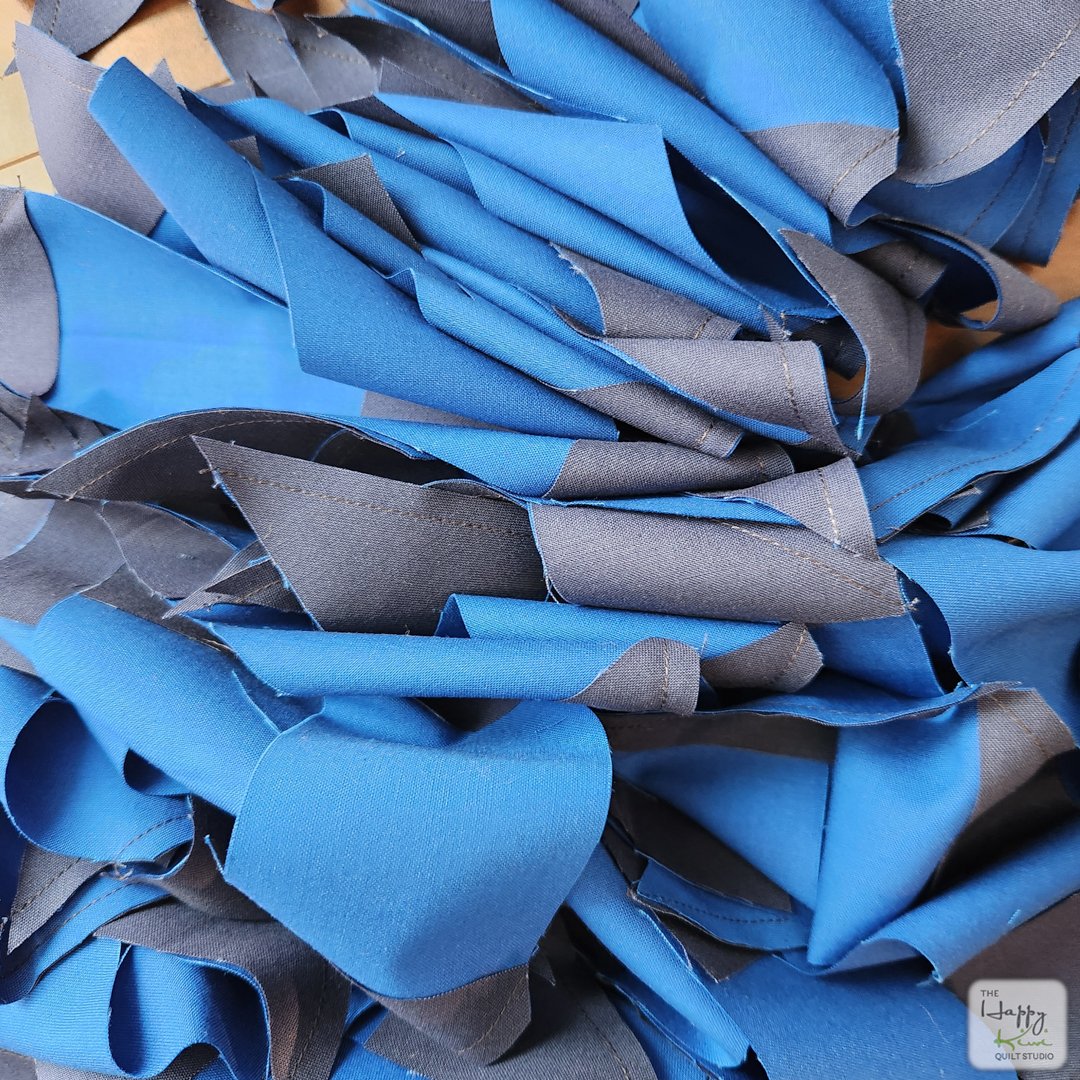
The solution turned out to be a mirrored version of the block. Block A and Block B are constructed the same, but the triangle seams are pressed in opposite directions. Now they play nicely. But the long seams? Those were stubborn. I thought about adding a seam I could spin, but I didn’t want to break up that long uninterrupted strip that gives the quilt its texture. So I gave in. I pressed them open. I burned my fingertips. I may have muttered some very colorful language. But it worked. The bulk disappeared, and the rhythm of the design stayed intact.
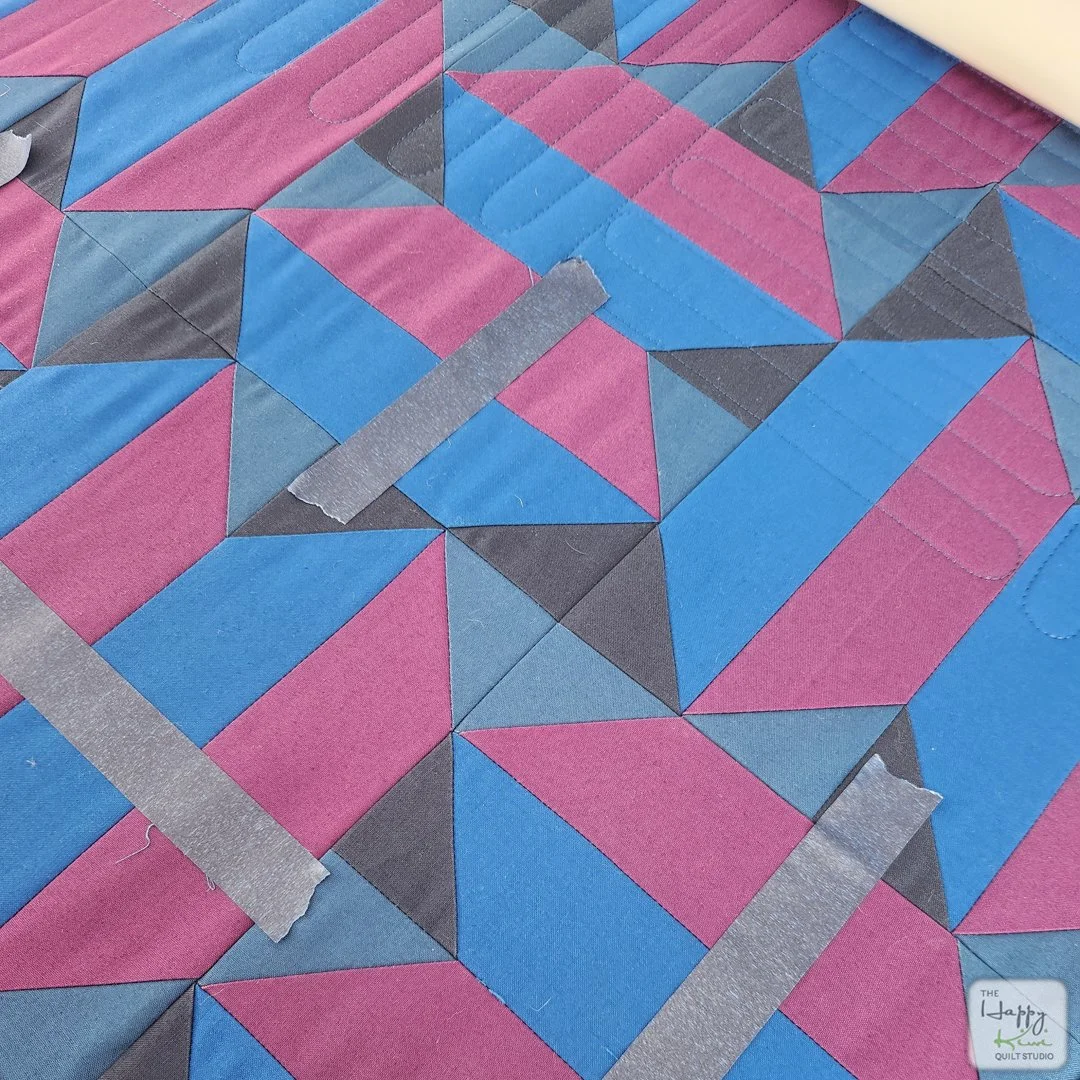
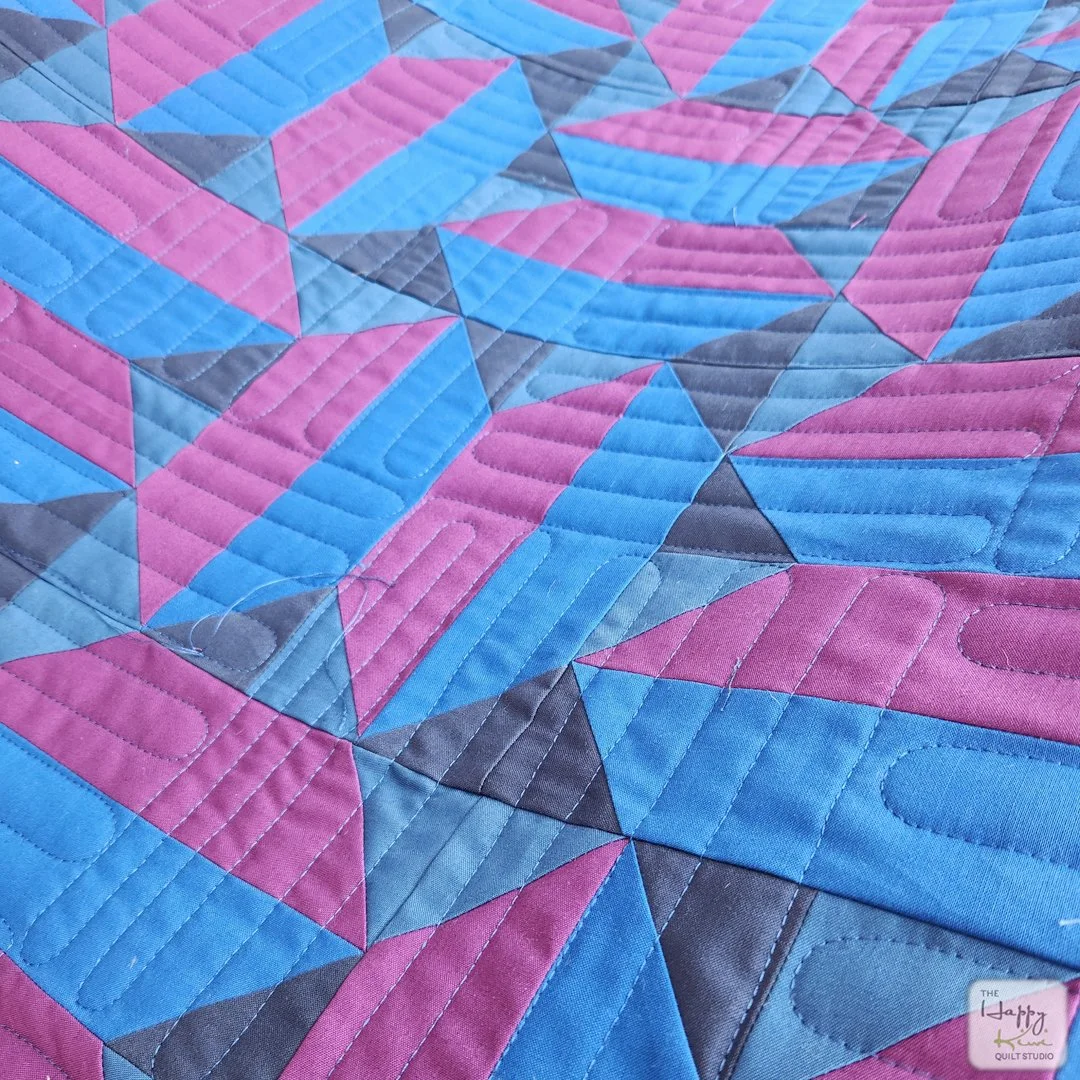
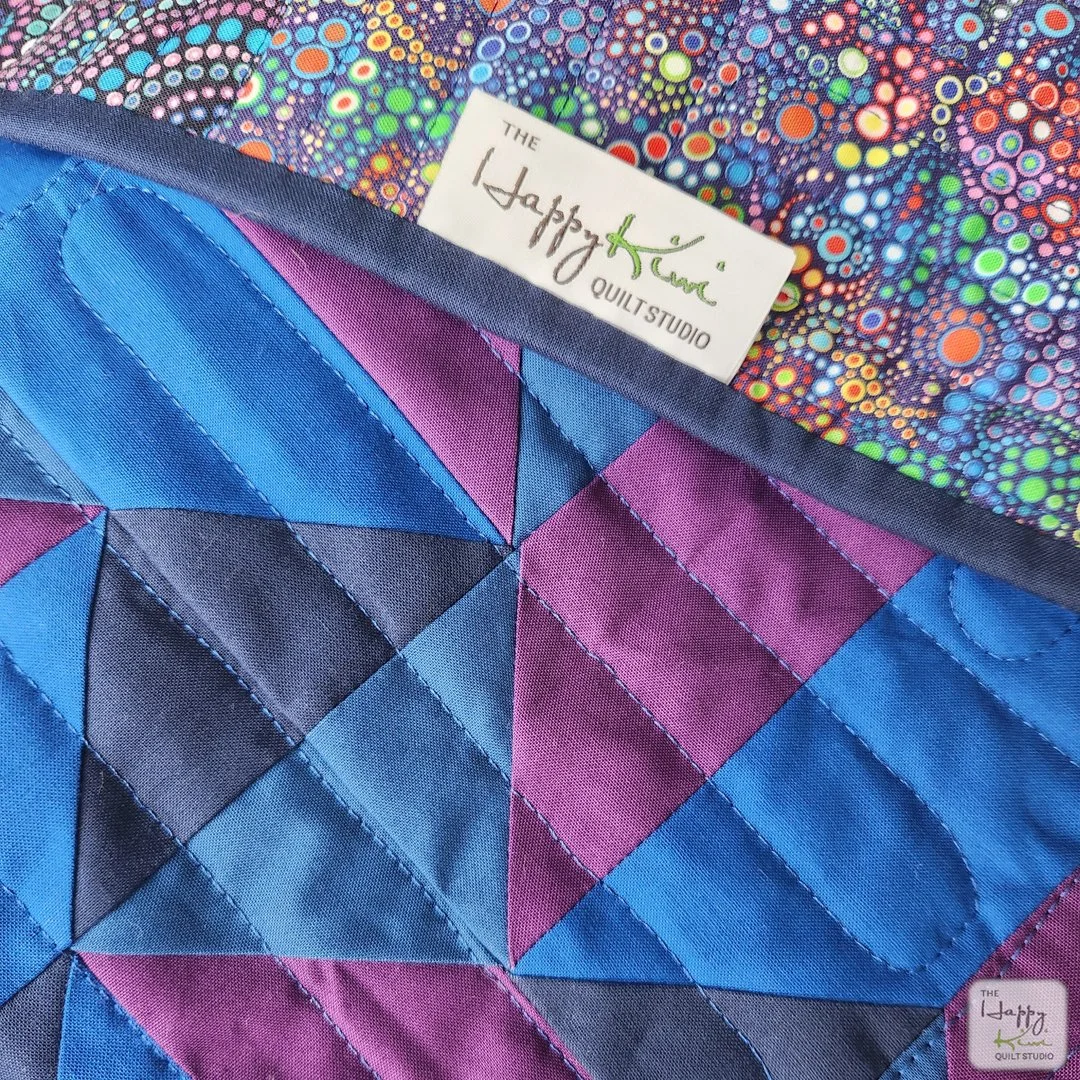
Color, of course, had opinions too. I already had bolts of royal blue and purple on hand, and I loved how they played together. But finding the right triangle fabrics? That became a whole thing. I overthought it, naturally—because color matters. I eventually realized one of my “navy” bolts was actually a deep, stormy blue. It was perfect. I paired it with Kona Prussian, which is a bit of a shapeshifter. It looks greenish next to the purple and like a dark teal next to the blue. The quilt liked it. So did I.
When it came time to quilt, I didn’t want to change thread colors. I picked a dark shade that mostly blends but occasionally pops out, and stitched a simple back-and-forth repeat that crosses the blocks using painters tape to guide me. It’s not flashy quilting. It doesn’t announce itself. It just adds structure and texture in the background. That’s my kind of quilting.
I’m not a skilled longarmer, and I’m not trying to be. If something gets a little lumpy, I don’t rip it out. I call it organic and keep going. My quilting doesn’t say “Hello, look at me.” It says “I’m doing my job. Carry on.”
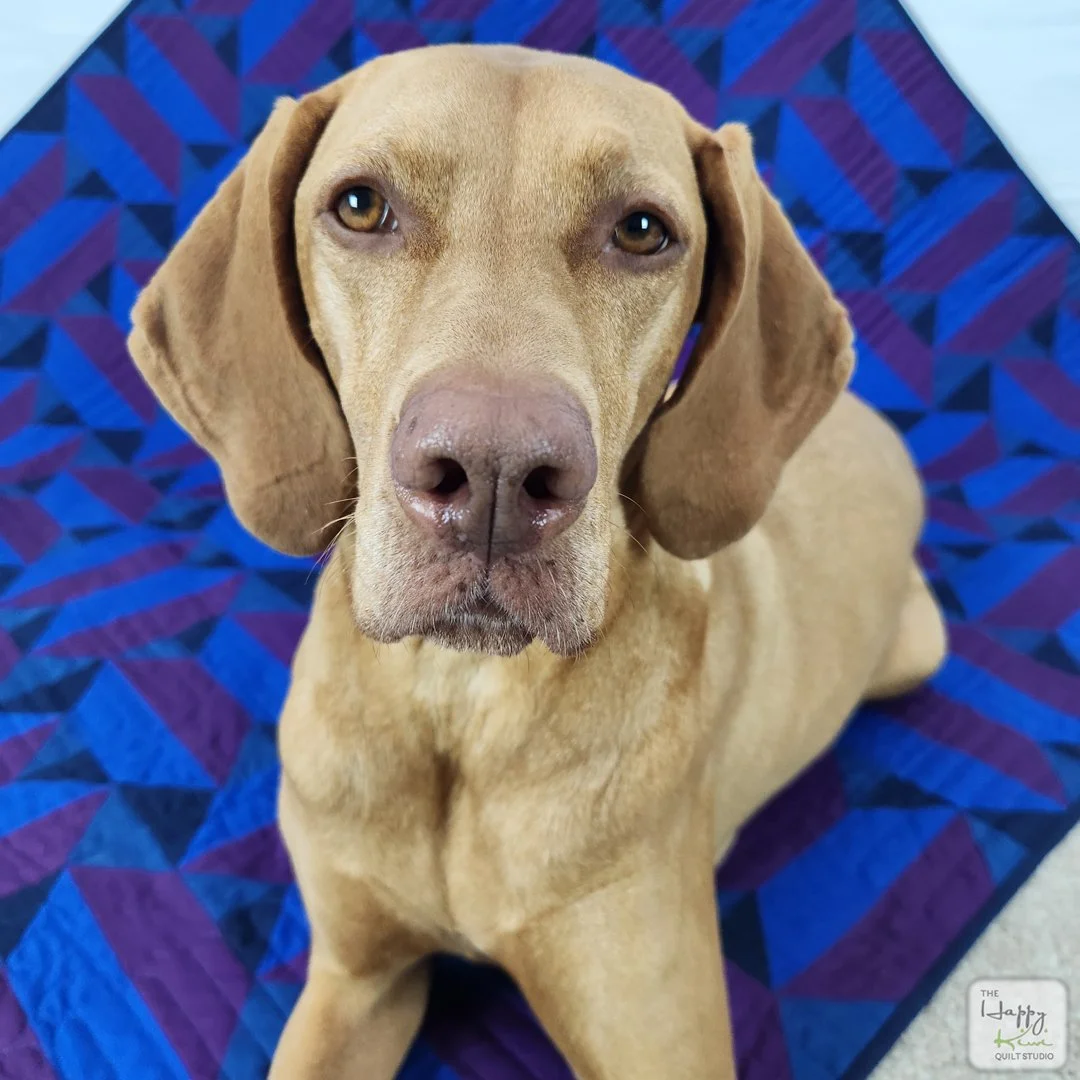
And through all of this—the moody palette, the stubborn seams, the quiet textural layers—this quilt just kept brooding. It grumbled at me. I grumbled back. And somewhere along the way, it took on a very Wuthering Heights energy. Stormy. Dark. A little dramatic. Very Heathcliff. Which is to say, it broods deeply but might just be grumpy.
That’s the story of this quilt. It grumbled. I grumbled louder. There were color debates, seam battles, and at least one moment of pressing-based existential doubt. But in the end, it worked.
